
Rocket OS - Hospitality ERP
A mature hospitality ERP running on an aging ASP.NET front-end needed a modern, component-based UI to support AI features, analytics, and multi-site operations. Delivered in under 6 months using AI-assisted migration and a senior domain-expert team.
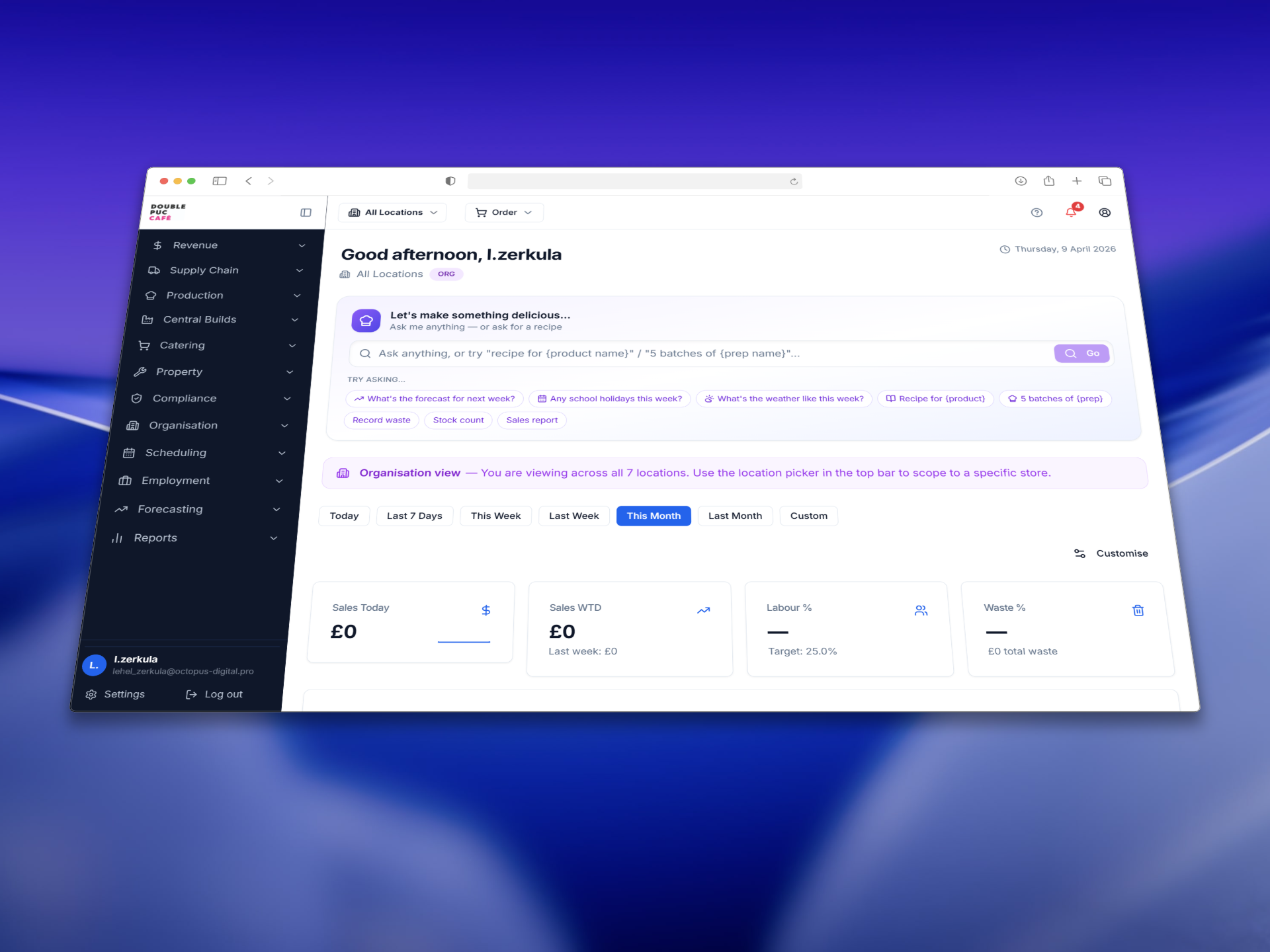
From legacy ASP.NET to a modern React stack, with AI-assisted code migration and a domain-expert team.
The Challenge
Rocket OS is a mature hospitality ERP: it handles staff scheduling, payroll, demand forecasting, inventory, multi-site P&L, and a growing suite of AI-driven operational tools. The platform's front-end, however, was built on an aging ASP.NET stack that had accumulated years of technical debt. Every new feature required navigating legacy patterns that slowed delivery and made it harder to ship the analytics and AI capabilities the product roadmap demanded.
The ask was clear: rebuild the front-end on a modern, component-based stack — without disrupting live customers across the UK and Eastern Europe — and do it in a timeframe that matched the product's commercial momentum.
The Approach
Discovery and mapping. Before writing a line of new code, we mapped every core screen, workflow, and permission model in the existing application. We documented the data contracts between front-end and API, identified the highest-complexity areas, and defined the migration sequence — starting with the modules used most frequently by operators.
AI-assisted code migration. We used AI coding assistants to accelerate the translation of repetitive view logic from ASP.NET Razor templates into React components. Initial component scaffolding, API bindings, and type definitions were generated and then reviewed by senior engineers before entering the codebase. Tasks that would have taken days of manual conversion took hours. Human judgment drove every architectural and UX decision.
Design system re-architecture. Rather than recreating the legacy UI pixel-for-pixel, we took the opportunity to re-architect the interface into a reusable component library — designed for speed, accessibility, and extensibility. The system was built to support the next generation of Rocket OS features: conversational analytics, AI-assisted decision support, and multi-site operational dashboards.
How AI Helped
• Automatic conversion of repetitive view logic into React components — reducing days of mechanical work to hours
• Test scaffold generation and refactoring suggestions across migrated modules
• Human review on every change — security, performance, and UX decisions remained entirely with the engineering team
The Outcome
The new React-based interface was delivered in under six months, including new analytics views and workflow improvements not present in the original system.
Time-to-ship for new features dropped significantly. Modules like waste-to-TGP insights and multi-site operational dashboards — features that would have taken months to add to the legacy stack — shipped in weeks on the new architecture.
Rocket OS is now AI-ready. The component architecture and API layer are designed to support conversational interfaces and AI-assisted operational tooling as first-class features — not retrofits.
The rebuild also removed a significant constraint on hiring: engineers joining the platform team now work in a modern stack rather than navigating ten-year-old ASP.NET patterns.
From the journal

AI & Technology · 17 April 2026
Everyone's Building Tools With Claude. The Hard Part Is Shipping Them.

Development · 17 April 2026
Umbraco vs WordPress: Why Serious Businesses Are Making the Switch
AI & Technology · 17 April 2026
Umbraco 17 Is Here — And It Changes How You Work
What we do
Strategy.
Engineering.
AI.
We are a boutique digital agency specializing in AI-powered development, high-end hospitality websites, and transformative technology solutions.