Everyone's Building Tools With Claude. The Hard Part Is Shipping Them.
Businesses across every sector are discovering what Claude can do — automating workflows, drafting content, synthesising data. But turning a promising prototype into a reliable, maintainable product is where most teams get stuck. That's exactly where we come in.

Something significant is happening in organisations that have moved beyond ChatGPT prompts and into the Anthropic API. Teams are building. Analysts are creating tools that turn hours of data synthesis into minutes. Marketing teams are automating content pipelines that previously required a small editorial department. Operations leads are building internal assistants that encode institutional knowledge that would otherwise walk out the door when a senior team member leaves.
The early results are, genuinely, unprecedented. Not a word we use lightly — but the productivity unlocks that Claude makes possible at the API level represent a category of gain that previous generations of software simply couldn't deliver.
Then the conversation shifts. "We've got this working really well in a spreadsheet. How do we turn it into something the rest of the team can use?"
This is where most projects stall.
Why Prototypes Don't Automatically Become Products
There's a predictable arc to many Claude implementation projects. A technically literate person in the business discovers what the API can do. They build something in a Python script, a Notion workflow, or a carefully constructed spreadsheet with API calls. It works brilliantly for them. They demo it. Everyone is impressed. And then the questions start.
- What happens when it gets it wrong?
- Who manages the prompts when we need to update them?
- Can this handle our enterprise data without it leaving our environment?
- How does this integrate with our CRM, CMS, or ERP?
- What does access control look like?
- How do we audit what it's doing?
These aren't obstructive questions. They're the right questions — the questions that distinguish a useful prototype from a reliable product. And answering them requires a different set of skills than building the prototype in the first place.
The Gap Is Real — And It's Not a Reflection on Your Team
Getting stuck at this stage isn't a failure. It reflects the genuine novelty of what's being attempted. Building LLM-powered tools that are robust enough for production — that handle edge cases gracefully, integrate cleanly with existing systems, respect data governance requirements, and can be maintained without the original builder being in the room — requires experience that most organisations simply haven't had time to accumulate yet.
The field is moving fast. The tooling is evolving. Best practices are being established in real time. Teams that are stuck aren't lacking ambition or intelligence. They're lacking the specific combination of AI engineering experience and software product discipline that turns a promising Claude workflow into something that ships.
What Productizing Actually Involves
When we work with clients to take a Claude-powered workflow from prototype to product, here's what we're typically solving:
Prompt architecture. Good prompts that work in a demo often break under production conditions — unusual inputs, edge cases, variations in data quality. We design prompt systems that are robust, testable, and maintainable by people who aren't prompt engineers.
Integration. Claude doesn't exist in isolation. It needs to read from and write to the systems your business already runs — your CMS, your CRM, your data warehouse, your document store. We build integrations that are reliable, monitored, and built to last.
Reliability and error handling. What happens when the API times out? When the output doesn't match expectations? When a user inputs something the system wasn't designed for? Production systems need graceful degradation, not silent failures.
Access control and governance. Who can use this tool? What data can it access? How do you audit what it's doing? These questions have technical and policy dimensions that need to be solved together.
Maintenance and iteration. Models change. Business requirements change. The prompts that work perfectly today may need refinement in three months. We build systems that can be updated without heroic effort.
The Umbraco Connection
For clients running Umbraco, the opportunity is particularly rich. Umbraco's flexible content model and extensible back office make it an excellent substrate for AI-powered tools — and we've been building them.
Custom Umbraco dashboards that surface AI-generated insights. Content enrichment workflows that run in the background as editors publish. Internal knowledge bases powered by your CMS content and queryable through natural language. Automated content QA that checks for consistency, completeness, and brand voice before anything goes live.
These aren't hypothetical. They're things we've built, deployed, and watched content teams use with something approaching delight.
Where We Come In
Octopus Digital sits at the intersection of AI engineering and CMS expertise. We understand what Claude is capable of — technically, not just at a surface level. And we understand the constraints of real organisations: legacy systems, governance requirements, editorial workflows, budgets that need to be justified.
If you've built something with Claude that's working brilliantly in prototype and you're not sure how to get it to production, we'd like to talk. If you have a workflow that's ripe for automation and you'd like an expert assessment of whether Claude is the right tool — and if so, what building it properly would look like — we'd like to talk about that too.
The tools exist. The potential is real. The missing piece is usually the bridge between what's technically possible and what your organisation can actually ship and sustain. That's the bridge we build.
Keep reading
Development · 17 April 2026
Umbraco vs WordPress: Why Serious Businesses Are Making the Switch
AI & Technology · 17 April 2026
Umbraco 17 Is Here — And It Changes How You Work

Development · 17 April 2026
How We Delivered a High-Performance Luxury Property Website on Kentico Xperience
Also from our work
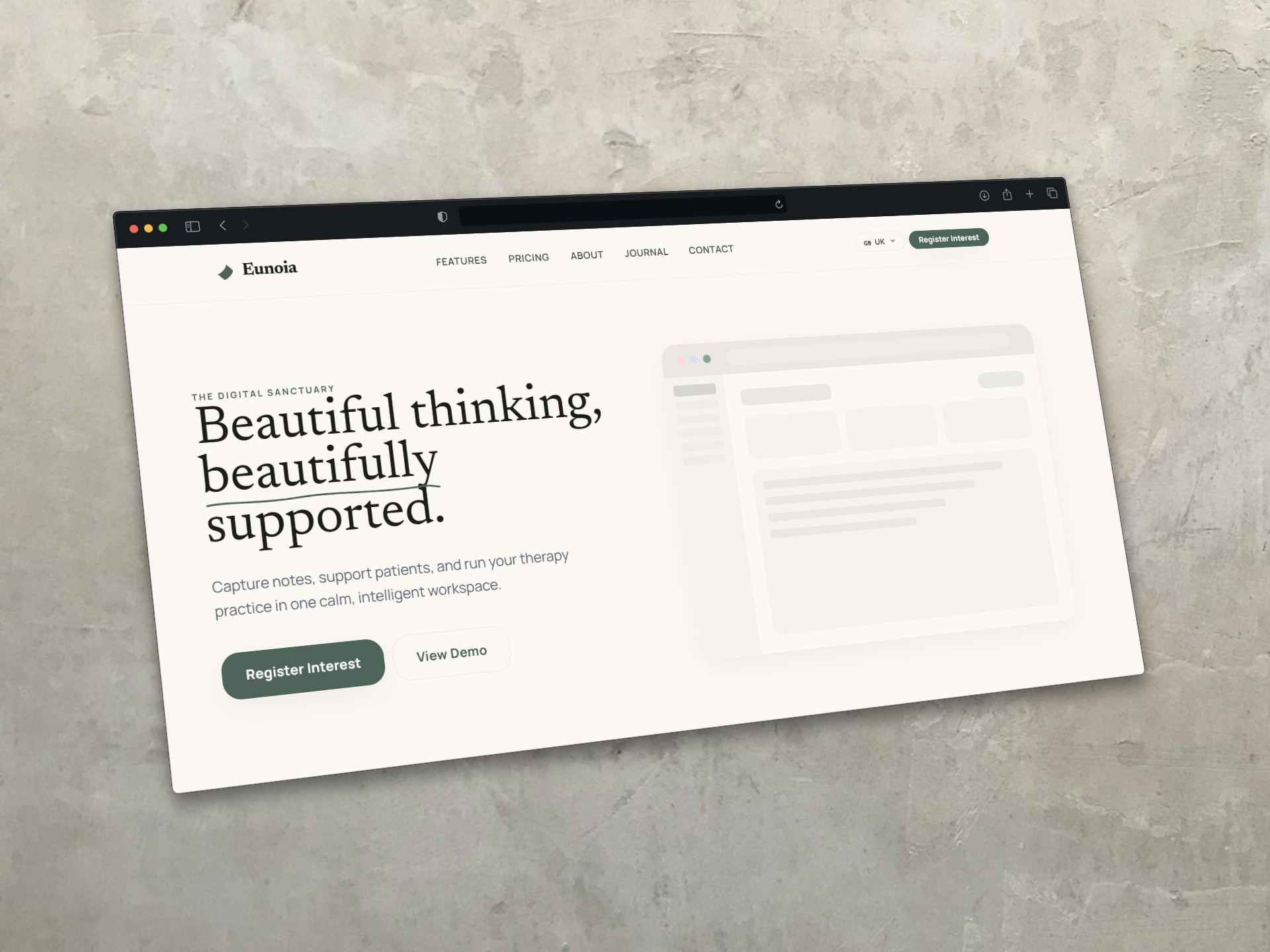
Eunoia
Eunoia – Praxismenedzsment terapeutáknak
Egy praxismenedzsment operációs rendszer pszichoterapeuták számára – amelyet azért fejlesztettünk, hogy csökkentse a terápiás munka adminisztratív terheit, így a szakemberek arra fordíthatják az idejüket, ami igazán számít.
View article