
Larix Studio
A deliberately simple portfolio site for an eco-conscious Transylvanian architecture studio that wanted their work shown, not sold. No conversion funnels, no lead generation — just the buildings, the drawings, and the photography, presented with the same restraint and precision that defines the practice.
Not every client wants to be sold. Larix Studio — an architecture practice based in Gheorgheni, in the heart of Transylvania — came to us with a brief that was precise in what it asked for and equally precise in what it did not. A portfolio site. Something that showed the work, communicated the practice's values, and got out of the way. No calls to action chasing leads. No conversion funnels. No service pages designed to convince. Just the architecture, presented honestly, for the people who would find it and know immediately whether it resonated.
Working within that constraint is a different kind of design problem than building a site optimised for commercial outcomes. It requires a confidence in restraint — the willingness to let the work speak without a framework of persuasion around it — and a deep understanding of what an architecture studio with a specific point of view actually needs from its digital presence.
The Brief: Show the Work, Not the Sales Pitch
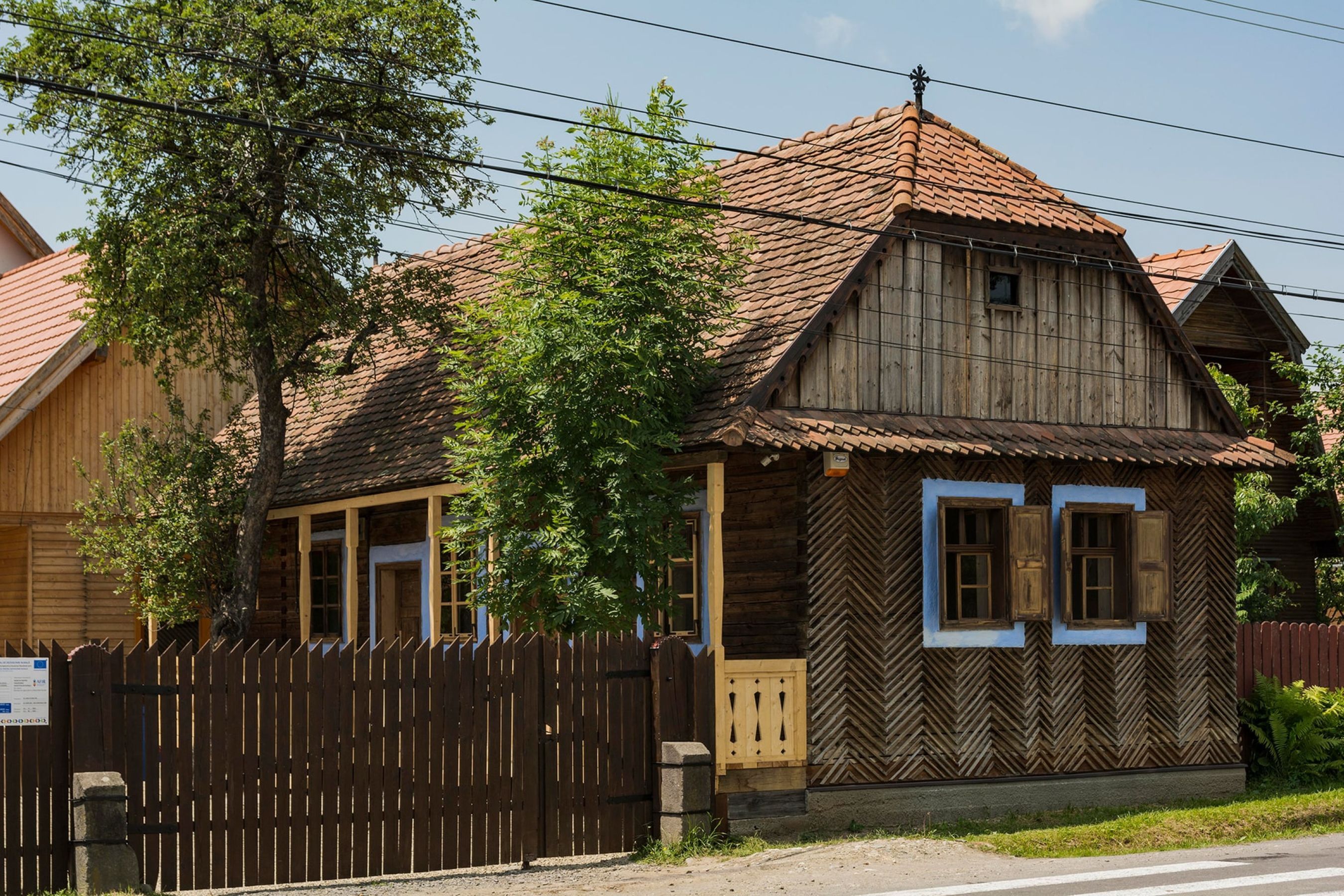
Larix Studio's architecture is rooted in Transylvania — in the landscape, the building traditions, the material palette, and the ecological sensibility of a region that rewards that kind of attention. Their projects span residential, commercial, and cultural work, and they share a quality of belonging: the sense that each building grew from its specific place rather than being imposed on it.
The studio had no interest in a website that obscured that sensibility behind marketing language. They wanted the photography and the drawings to carry the weight, the typography to feel considered without calling attention to itself, and the navigation to be simple enough that a visitor found what they were looking for without needing to be guided towards a decision. The brief was, in its own way, as architecturally precise as the buildings it was representing.
Working with a design-conscious client who knows exactly what they do not want is one of the more pleasurable challenges in digital work. There is no ambiguity to manage, no stakeholder misalignment to navigate. There is a clear standard — the studio's own visual intelligence — and the work is to meet it.
Super Simple, Deliberately So
The temptation in portfolio design is to demonstrate craft through complexity — elaborate transitions, layered grid systems, typographic experimentation that announces itself. Larix Studio's own architecture is the opposite of that: rigorous, material-honest, quietly confident. The website needed to reflect the same sensibility.
The layout is uncluttered. The navigation has one level. The typeface is chosen for its neutrality and precision, not for personality. The colour palette defers entirely to the photography — no brand colour competes with the terracotta, timber, and stone that define the practice's material language. Whitespace is generous, not because whitespace is fashionable, but because the drawings and photographs need room to be looked at rather than scanned.
Every element that does not serve the work was removed. The process of arriving at that simplicity was not simple — restraint requires more decisions than elaboration, because every decision to exclude something is a deliberate choice that has to be defended against the instinct to add. The result is a site that feels inevitable: exactly as much as it needs to be, no more.
Portfolio Architecture for a Practice That Works at Every Scale
Larix Studio's project types range from intimate residential extensions to larger cultural and commercial commissions. Each project has its own photographic record — often extensive, because Romanian architectural photography at this level is genuinely exceptional — and its own set of technical drawings that tell a different story from the built photography alone.
The portfolio architecture is built to serve both. Projects are filterable by typology without the filter mechanism dominating the page. Individual project pages present photography at full scale, with drawings available for the visitors who want to understand how the building was thought through before it was built. The navigation between projects is fluid — a visitor absorbed in one project can move to the next without returning to a listing page, because the site understands that engagement with a practice's portfolio is not a transactional browse.
Eco-Conscious Values, Reflected in the Digital Approach
Larix Studio's ecological sensibility is not a marketing position — it is embedded in how they choose projects, choose materials, and think about a building's relationship to its site and climate. A digital presence for a practice with that value system should at minimum not contradict it.
The build is lightweight by design. The codebase is lean, the JavaScript is minimal, and the image pipeline is optimised so that the photography that defines the site's visual quality does not come at the cost of unnecessary data transfer. A site that loads quickly and efficiently, that does not demand more of the visitor's device and network than it needs to, is consistent with a practice that designs buildings to take only what they need from their environment.
Performance here is not primarily a conversion argument — it is an expression of values. Fast, clean, efficient. The same words that describe the architecture.
The Result: A Digital Presence as Considered as the Practice
Larix Studio's website does exactly what it was asked to do. It presents the portfolio with clarity and confidence. It communicates the practice's sensibility — rooted in place, materially honest, ecologically considered — without explaining or justifying it. It attracts the visitors who will find it and know immediately that this is the kind of architecture they care about, and it does not waste their time or attention on anything else.
For a studio whose work is defined by knowing what to leave out, a website built on the same principle is not a compromise. It is the correct expression of what the practice actually is.
It is also a reminder that the most satisfying digital projects are not always the most technically complex ones. Sometimes the brief is to do one thing, do it well, and step back. Larix Studio gave us that brief. We were glad to take it.
From the journal
AI & Technology · 17 April 2026
Everyone's Building Tools With Claude. The Hard Part Is Shipping Them.
Development · 17 April 2026
Umbraco vs WordPress: Why Serious Businesses Are Making the Switch
AI & Technology · 17 April 2026
Umbraco 17 Is Here — And It Changes How You Work
What we do
Portfolio.
Identity.
Craft.
We are a boutique digital agency specializing in AI-powered development, high-end hospitality websites, and transformative technology solutions.