
The Discovery Phase Your Agency Is Skipping — And Why Your Redesign Will Fail Without It
70% of digital projects fail to meet their objectives. Projects with a formal discovery phase are 2.5× more likely to deliver on time and budget. The phase most agencies skip is the one that determines whether everything else works.

A client comes to an agency with a brief: we need a new website. The agency responds with a proposal that begins with design and ends with development. The discovery phase — if it appears at all — is a two-week line item somewhere near the top, described as 'kickoff and requirements gathering', billed at a fraction of its actual value, and treated by both parties as a necessary preamble to the real work.
This is the pattern that produces the statistic: 70% of digital projects fail to meet their objectives, according to a long-standing body of research including the Standish Group's Chaos Report. The failure is rarely a technical failure. It is a specification failure — the team built the wrong thing, correctly.
What Discovery Actually Is
Discovery is the phase where you establish, with evidence, what the right thing to build actually is. It is not requirements gathering — writing down what the client thinks they want. It is the process of understanding the problem well enough to know whether what the client thinks they want will actually solve it.
A proper discovery phase for a website project includes: analysis of the current site's performance data and user behaviour (not assumptions about it); interviews with actual users or customers to understand how they experience the current site and what they need from the new one; a competitive landscape review that goes beyond visual benchmarking to assess conversion patterns and content strategy; and a technical audit of the existing stack, integrations, and content structure.
The deliverable is not a wireframe. It is a set of documented decisions: who the site is for, what it needs to accomplish for each audience, what the measurable success criteria are, and what architectural and design constraints are non-negotiable. These decisions govern every subsequent choice in the project.
The Cost of Skipping It
Projects with a formal discovery phase are 2.5× more likely to deliver on time and on budget, according to research by the Project Management Institute. The mechanism is straightforward: decisions made without a discovery foundation get made twice — once during the build when they are based on assumptions, and again during or after launch when the assumptions turn out to be wrong.
The average cost of a post-launch redesign — rebuilding significant portions of a site because the original specification missed something fundamental — is 3–5× the cost of the original build. A discovery phase that represents 10–15% of the project budget and catches a fundamental specification error pays for itself many times over.
The less visible cost is the opportunity cost of launching the wrong thing. A website built on a correct specification that reflects real user needs converts better, retains visitors longer, and supports the commercial objectives it was built for. A website built on assumed requirements does none of these things reliably.
What Good Discovery Looks Like in Practice
On every project at Octopus, discovery is a distinct, substantive phase with defined outputs. It typically runs two to four weeks depending on project complexity and produces a discovery document that includes: audience personas grounded in actual research, not marketing assumptions; a content audit with structural recommendations; a technical specification for integrations and infrastructure; a defined information architecture; and explicit success metrics that will be used to evaluate the finished site.
The discovery document is the project's contract with reality. When a design decision is debated later in the project, the answer lives in the discovery document. When a scope question arises, the discovery document provides the framework for evaluating whether a proposed addition serves the agreed objectives. When the site launches, the success metrics from discovery provide the basis for evaluation rather than subjective opinion.
Clients who have worked with agencies that skip this step often find the investment surprising. Those who have experienced a project that went wrong without it understand it immediately.
Keep reading

AI & Technology · 17 April 2026
Everyone's Building Tools With Claude. The Hard Part Is Shipping Them.
Development · 17 April 2026
Umbraco vs WordPress: Why Serious Businesses Are Making the Switch
AI & Technology · 17 April 2026
Umbraco 17 Is Here — And It Changes How You Work
Also from our work
Eunoia
Eunoia – Praxismenedzsment terapeutáknak
Egy praxismenedzsment operációs rendszer pszichoterapeuták számára – amelyet azért fejlesztettünk, hogy csökkentse a terápiás munka adminisztratív terheit, így a szakemberek arra fordíthatják az idejüket, ami igazán számít.
View article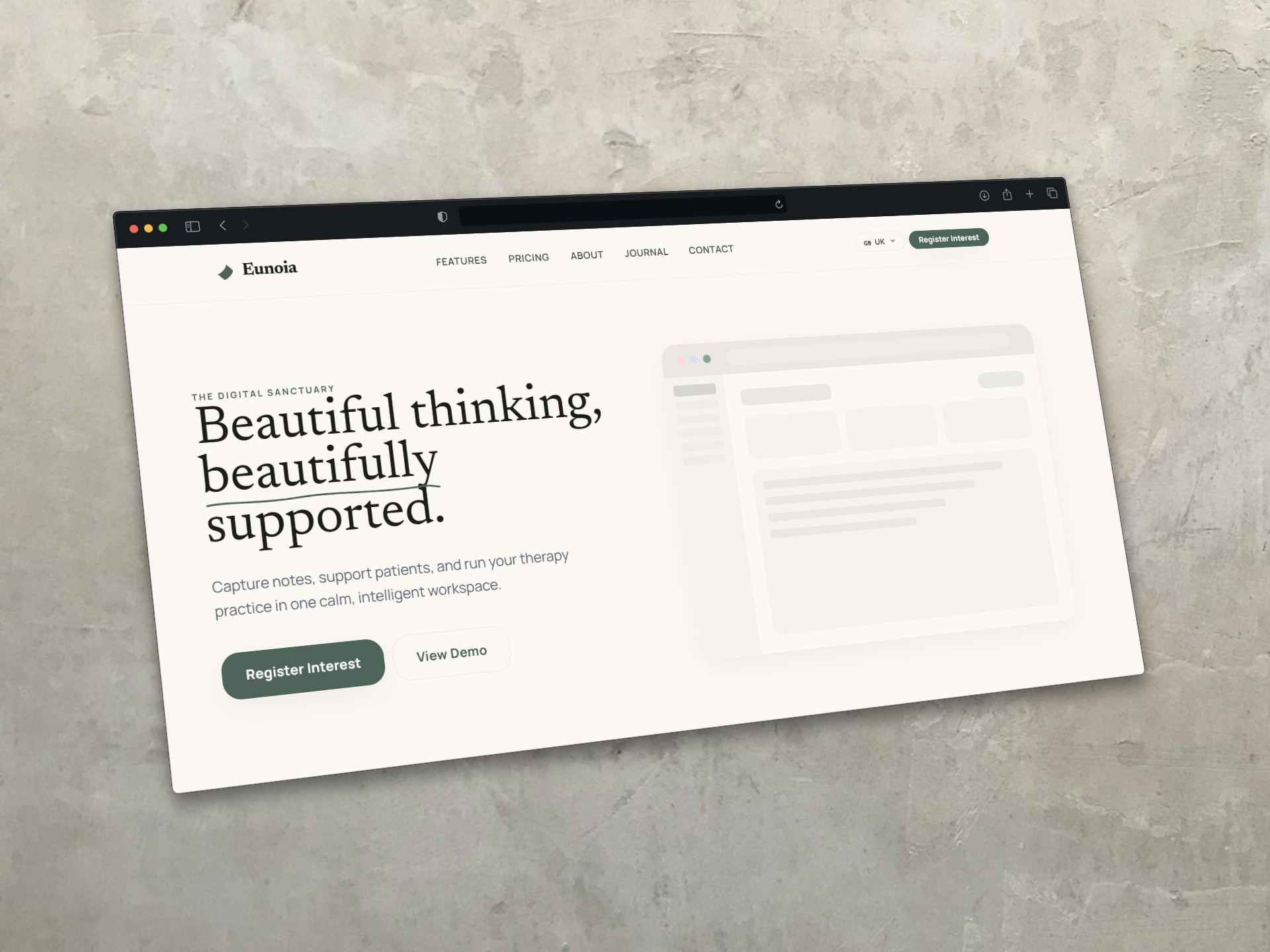
Keep Reading