
Ecommerce Personalisation: How Mid-Market Retailers Can Now Compete With Amazon's Recommendation Engine
Personalised product recommendations drive 35% of Amazon's revenue. 91% of consumers prefer brands that personalise. Implementation costs have dropped 80% in three years. The capability is no longer reserved for businesses with Amazon's engineering budget.

Amazon's recommendation engine — 'customers who bought this also bought', 'recommended for you', 'frequently bought together' — drives approximately 35% of the company's total revenue according to McKinsey's research. It is one of the most commercially valuable pieces of software ever built, and for most of the past decade, the engineering investment required to build something comparable meant it was available only to businesses with Amazon-scale engineering budgets.
That has changed. The vector database infrastructure that powers semantic similarity, the embedding models that convert product descriptions into comparable representations, and the ML frameworks that train personalisation models are now available as managed services at a fraction of their 2019 cost. A mid-market retailer doing £5M–£50M in annual revenue can now deploy meaningful product personalisation without a dedicated ML team.
What Personalisation Actually Drives
91% of consumers say they are more likely to shop with brands that provide relevant offers and recommendations according to Accenture's research on personalisation in retail. The effect is not limited to recommendation click-through rates — personalised experiences reduce the time-to-purchase decision (because the relevant product is surfaced without requiring the customer to search for it), increase average order value (through contextually relevant cross-sells and upsells), and improve retention (because the shopping experience improves with repeated visits as the system learns preferences).
Personalised product recommendation conversion rates are 5.5× higher than non-personalised product listings according to Barilliance's analysis of ecommerce personalisation across 300+ retailers. The mechanism is simple: a customer shown a product relevant to their demonstrated interests is more likely to buy it than a customer shown a product determined by manual merchandising alone.
The Three Tiers of Personalisation
Rule-based personalisation is the starting point: show recently viewed products, cross-sell complementary categories based on what is in the cart, surface products in the customer's most-purchased size or colour. This requires no ML — it is logic applied to session and order history data. It is also high-impact and achievable in any ecommerce stack with a moderate development investment.
Collaborative filtering — 'customers who purchased X also purchased Y' — requires sufficient order volume to produce reliable signal. The threshold is typically 10,000+ transactions, after which purchase co-occurrence patterns become statistically meaningful. This is within reach for mid-market retailers and is the algorithm behind the 'frequently bought together' pattern that Amazon popularised.
Semantic product recommendations use vector embeddings of product descriptions, attributes, and imagery to surface products that are similar in meaning rather than just co-purchased. This is the most powerful tier and the one whose cost has dropped most dramatically. A vector embedding pipeline that cost £50,000 to build in 2021 is now achievable for under £5,000 using managed services from Pinecone, Weaviate, or pgvector.
The Implementation Path for Mid-Market Retailers
We approach personalisation implementation in stages that generate commercial return at each step rather than requiring the full system to be complete before any value is delivered.
Stage one is the data foundation: connecting order history, browsing behaviour, and product catalogue data into a unified schema that personalisation logic can query. This is the enabling layer that all subsequent personalisation builds on. Stage two is rule-based personalisation on the highest-traffic pages: homepage featured products, product detail cross-sells, and cart recommendations. These are highest-ROI and lowest-complexity.
Stage three introduces collaborative filtering on the product catalogue, once sufficient order volume exists. Stage four adds semantic recommendations using vector embeddings — particularly valuable for catalogues where keyword matching fails (a customer who bought a 'slate grey merino crew neck' is probably interested in 'charcoal wool round neck sweaters', a match that co-purchase data alone might not surface).
Mid-market retailers who implement personalisation systematically — starting with rule-based and building toward ML-powered recommendations — typically see 15–25% revenue uplift within 12 months, according to Nosto's retail personalisation benchmark. The investment payback at that uplift level is rapid, and the competitive moat deepens as the system accumulates more behavioural data.
The era when meaningful ecommerce personalisation required Amazon-scale resources is over. The question for mid-market retailers is no longer whether to invest — it is how to sequence the investment to maximise return at each stage.
Keep reading

AI & Technology · 17 April 2026
Everyone's Building Tools With Claude. The Hard Part Is Shipping Them.

Development · 17 April 2026
Umbraco vs WordPress: Why Serious Businesses Are Making the Switch
AI & Technology · 17 April 2026
Umbraco 17 Is Here — And It Changes How You Work
Also from our work
Eunoia
Eunoia – Praxismenedzsment terapeutáknak
Egy praxismenedzsment operációs rendszer pszichoterapeuták számára – amelyet azért fejlesztettünk, hogy csökkentse a terápiás munka adminisztratív terheit, így a szakemberek arra fordíthatják az idejüket, ami igazán számít.
View article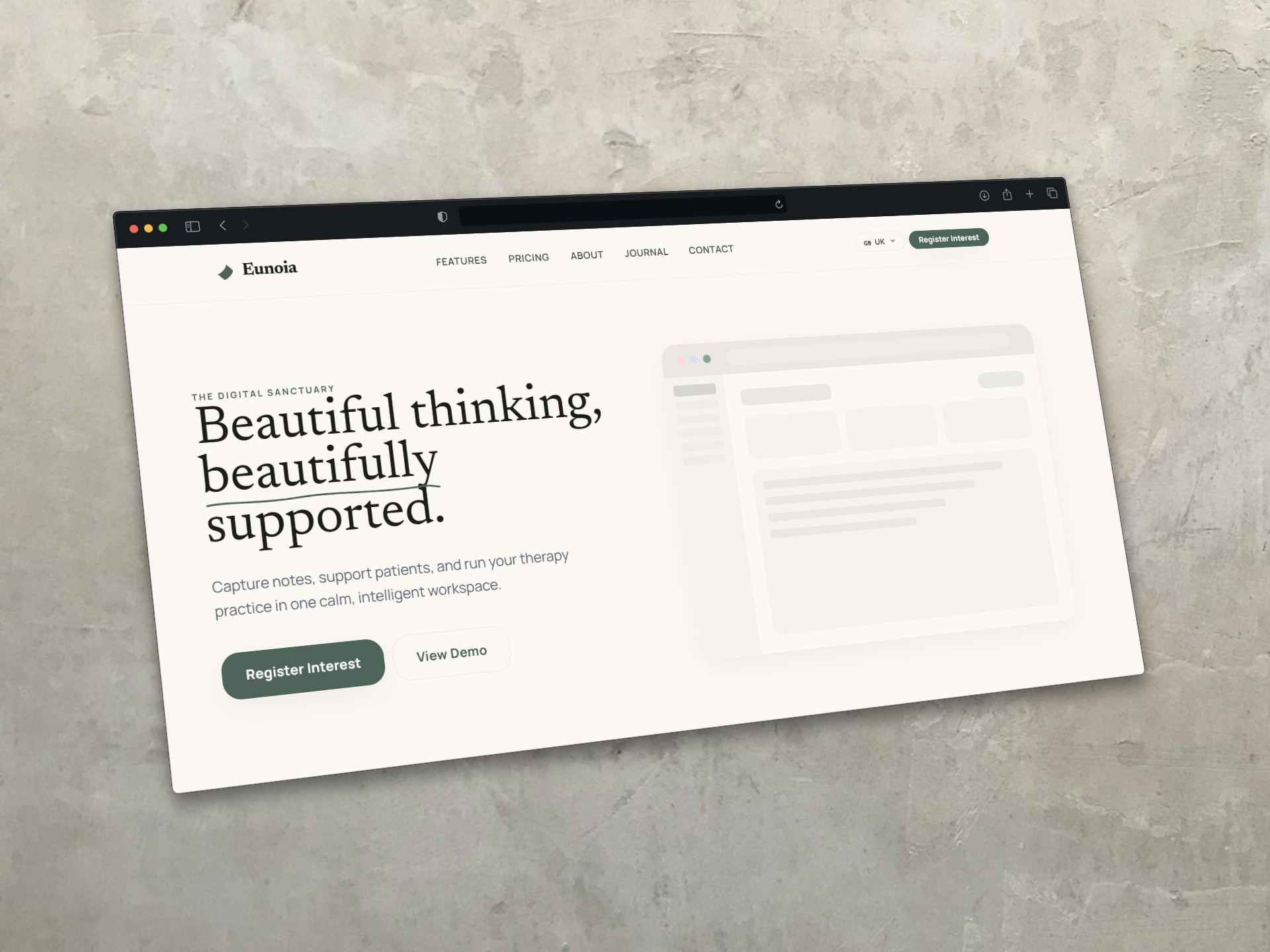
Keep Reading