
B2B Ecommerce in 2026: Why Your B2C Platform Is Failing Your Business Customers
The B2B ecommerce market is worth £1.8 trillion globally. 73% of B2B buyers are millennials expecting consumer-grade UX. But B2B purchasing is structurally different — and B2C platforms were not built for it.
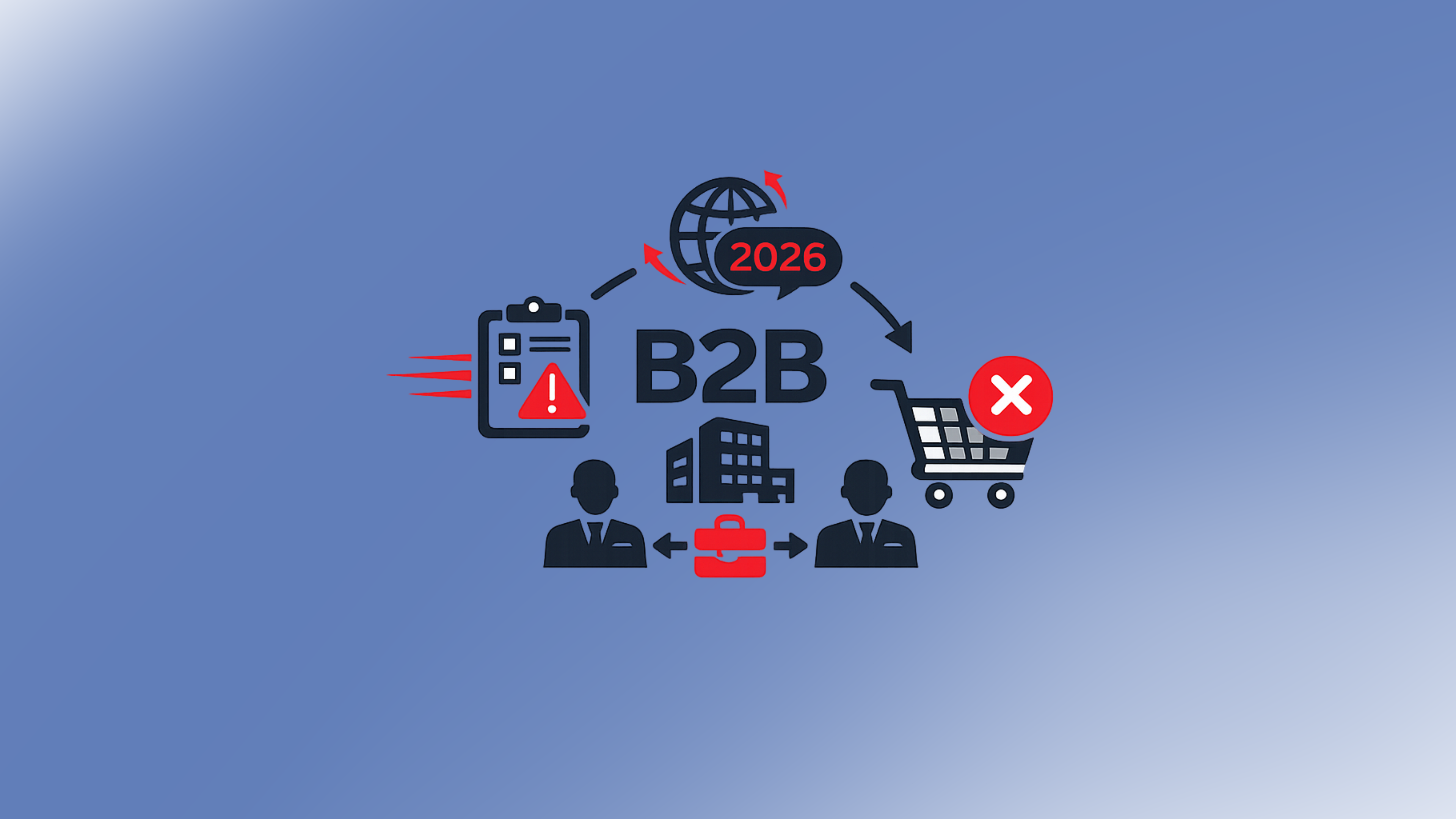
The B2B ecommerce market reached £1.8 trillion globally in 2024 and is growing at approximately 18% annually, according to Statista. It is substantially larger than the B2C ecommerce market and, relative to its size, significantly under-served by purpose-built technology. Most B2B sellers are either operating through sales-rep-mediated manual processes, through a B2C platform that was not designed for their purchasing workflow, or through an ERP-integrated portal that is technically functional and experientially miserable.
73% of B2B buyers are now millennials according to Forrester, and they bring B2C expectations to their professional purchasing: self-service ordering without account manager involvement, real-time stock visibility, instant order confirmation, and clean digital invoicing. The expectation gap between what B2B buyers want and what most B2B ecommerce platforms deliver is wide and commercially consequential.
Why B2C Platforms Fail B2B
B2B purchasing has structural characteristics that B2C platforms were not designed to handle. These are not preferences — they are requirements that determine whether a B2B customer can use the platform at all.
Customer-specific pricing. B2B pricing is almost never universal. Contract customers have negotiated rates. Volume purchasers have tiered pricing. Resellers have margin-based pricing. A platform that shows a single price to all authenticated users cannot support a B2B sales model where price is a relationship variable.
Purchase order workflows. B2B buyers frequently purchase on account with a PO number rather than a credit card. The order is placed against an existing credit line, invoiced net-30, and reconciled against the PO in the buyer's procurement system. A checkout flow that requires card payment at the point of order is not a B2B checkout — it is a B2C checkout that has been made available to business users.
Multi-user accounts with approval workflows. B2B purchasing often involves a buyer who creates the order and an approver who authorises it, within a company account where multiple users have different roles and permissions. Single-user account models do not support this.
Bulk ordering and reorder patterns. B2B customers order the same products repeatedly, in quantities that are often order-of-magnitude higher than B2C. Quick order forms, saved order templates, and CSV upload for bulk orders are standard expectations in B2B ecommerce that B2C platforms do not typically include.
The Architecture for B2B
A properly built B2B ecommerce platform layers B2B-specific logic on top of a commerce foundation. The core product catalogue, inventory, and order management can sit on Shopify Plus or a headless commerce platform. The B2B layer adds customer-specific pricing rules, PO workflow management, multi-user account structures with role-based permissions, net payment terms and invoicing, and the bulk ordering UX that B2B customers require.
Shopify Plus's B2B native features (launched in 2022 and expanded since) handle a significant portion of this for merchants who can work within its model. For B2B sellers with complex pricing logic, ERP integration requirements, or workflow customisation needs that exceed the platform's flexibility, a custom B2B layer built on Shopify's API or a headless commerce foundation is the appropriate architecture.
The Revenue Case
B2B average order values are typically 4–5× higher than B2C according to Shopify's commerce data. B2B customers also exhibit higher retention rates and more predictable revenue patterns than B2C customers, because purchasing decisions are embedded in operational workflows rather than being discretionary. The commercial upside of a well-built B2B ecommerce experience — reduced sales team involvement in routine orders, higher order frequency, lower customer acquisition cost through self-service — is substantial.
We build B2B ecommerce platforms that close the gap between the experience B2B buyers expect and the one most B2B sellers currently deliver. The constraint is rarely technical — purpose-built B2B ecommerce is entirely achievable with current tooling. The constraint is understanding the B2B buying workflow well enough to design for it, which is where most B2C-oriented ecommerce agencies fall short.
Keep reading

AI & Technology · 17 April 2026
Everyone's Building Tools With Claude. The Hard Part Is Shipping Them.

Development · 17 April 2026
Umbraco vs WordPress: Why Serious Businesses Are Making the Switch
AI & Technology · 17 April 2026
Umbraco 17 Is Here — And It Changes How You Work
Also from our work
Eunoia
Eunoia – Praxismenedzsment terapeutáknak
Egy praxismenedzsment operációs rendszer pszichoterapeuták számára – amelyet azért fejlesztettünk, hogy csökkentse a terápiás munka adminisztratív terheit, így a szakemberek arra fordíthatják az idejüket, ami igazán számít.
View article
Keep Reading