
WCAG 2.2 Compliance: The Legal, Commercial, and Human Case That Is Stronger Than You Think
1 in 5 adults in the UK has a disability. The Equality Act 2010 applies to websites. US ADA accessibility lawsuits increased 300% in five years. And accessible websites rank higher in Google. The case is not just ethical — it is commercial.
Accessibility is the area of web development most commonly deferred, most frequently treated as optional, and most likely to generate legal and commercial consequences when ignored. It is also the area where there is the most persistent gap between what organisations believe (our users do not have disabilities, accessibility is a niche concern, we will add it later) and what the data shows.
1 in 5 adults in the UK has a disability that affects how they use digital services, according to the Office for National Statistics. That includes visual impairments, motor disabilities, cognitive differences, and hearing impairments — many of which are invisible and none of which are niche. The user who cannot complete your checkout because the error messages are only distinguished by colour is not an edge case; they are a customer you are losing.
The Legal Exposure
In the UK, the Equality Act 2010 requires that reasonable adjustments be made to ensure that disabled people can access services, including digital services. The Web Content Accessibility Guidelines (WCAG) are the recognised technical standard for meeting this requirement. A website that fails WCAG 2.2 Level AA — the standard cited in most legal and regulatory guidance — creates measurable legal exposure.
In the United States, the picture is even sharper. ADA Title III accessibility lawsuits against websites increased by over 300% in the five years to 2024. These suits are no longer limited to large corporations — they target businesses of all sizes, and the majority settle, with typical settlements in the $25,000–$100,000 range plus legal costs plus remediation.
The EU Accessibility Act, which came into full force in June 2025, requires that all digital products and services offered in EU markets meet WCAG 2.1 Level AA as a minimum. For UK businesses with EU customers, this is not a choice.
The Commercial Case
Beyond legal compliance, accessible websites perform better by most commercial measures. Screen reader users and keyboard-only users have higher average session durations on accessible sites, because they are not spending that time fighting non-compliant interfaces. Accessible sites tend to have cleaner HTML semantics, which correlates with better search engine indexing and higher organic rankings.
Google has explicitly stated that accessibility is considered a quality signal. Sites with clear heading structures, properly labelled form fields, meaningful link text, and sufficient colour contrast provide better signals for crawler interpretation of content than sites that rely on visual layout to convey information structure.
The population with disabilities also has significant spending power. In the UK, the 'purple pound' — the spending power of disabled people and their households — is estimated at £274 billion annually. A website that excludes a material fraction of this population by being non-compliant is not just creating legal risk; it is excluding customers.
What WCAG 2.2 Requires in Practice
WCAG 2.2 added nine new success criteria to the existing WCAG 2.1 standard. The most commercially significant for typical websites are: Focus Appearance (ensuring keyboard focus indicators are clearly visible — relevant to keyboard-only and motor-impaired users), Accessible Authentication (not requiring cognitive tests like CAPTCHA without accessible alternatives), and Dragging Movements (ensuring drag interactions have keyboard or single-pointer alternatives).
At Octopus, we build to WCAG 2.2 Level AA as a baseline on every project — not as an add-on or a compliance exercise, but as a quality standard. Accessible HTML, sufficient colour contrast, keyboard navigability, and screen reader compatibility are part of our definition of a correctly built website. The additional effort relative to building non-accessibly is small when done from the start; it is substantial when retrofitted.
Clients who commission accessible builds from the beginning avoid the legal exposure, capture the commercial benefits, and avoid the significantly higher cost of remediation.
Keep reading

AI & Technology · 17 April 2026
Everyone's Building Tools With Claude. The Hard Part Is Shipping Them.
Development · 17 April 2026
Umbraco vs WordPress: Why Serious Businesses Are Making the Switch
AI & Technology · 17 April 2026
Umbraco 17 Is Here — And It Changes How You Work
Also from our work
Eunoia
Eunoia – Praxismenedzsment terapeutáknak
Egy praxismenedzsment operációs rendszer pszichoterapeuták számára – amelyet azért fejlesztettünk, hogy csökkentse a terápiás munka adminisztratív terheit, így a szakemberek arra fordíthatják az idejüket, ami igazán számít.
View article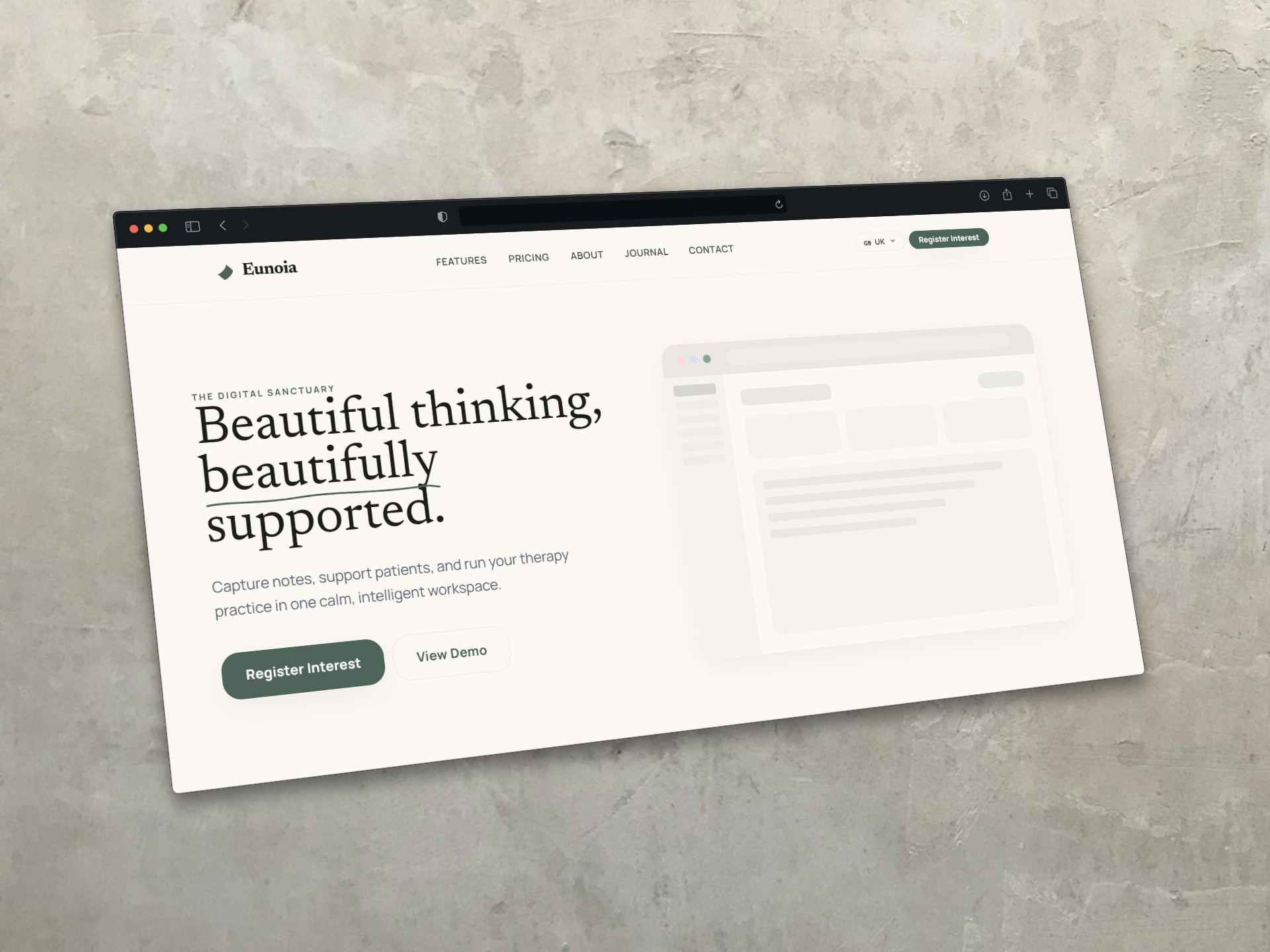
Keep Reading