
Subscription Billing Infrastructure: Why Your Stripe Integration Is Probably Wrong
Billing errors cost SaaS companies 2–5% of ARR. Failed payment churn accounts for 20–40% of all customer churn. Stripe handles the payments — but the integration around it determines whether your revenue model actually works.
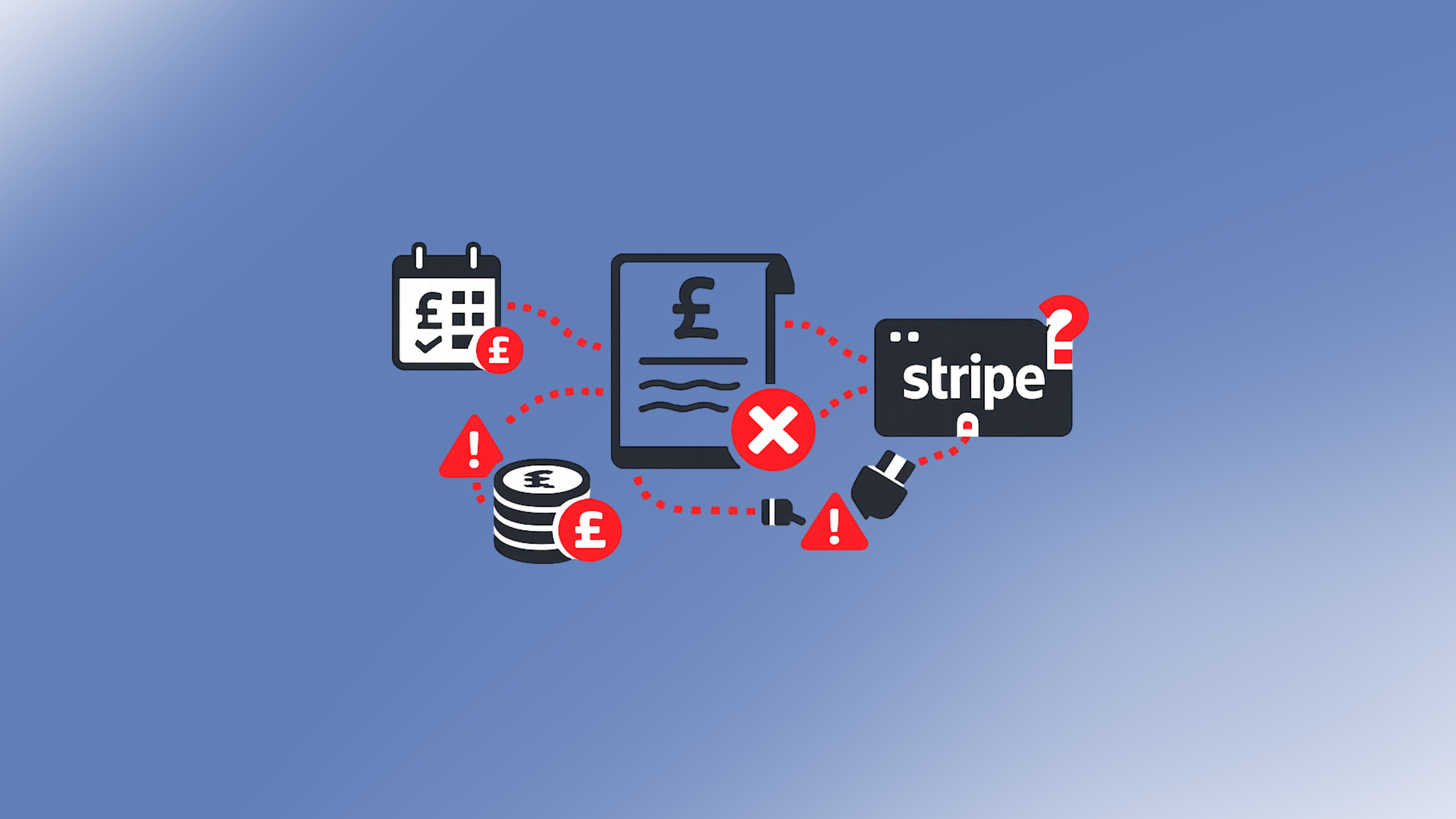
Stripe is an excellent payments infrastructure provider. It is not a billing system. The distinction matters because teams that treat Stripe as their billing system — building their subscription logic primarily inside Stripe's dashboard rather than in their own application — create a set of failure modes that are expensive to diagnose and difficult to reverse.
The most common pattern: a developer integrates Stripe Checkout, creates a few Price objects in the Stripe dashboard, and deploys. Subscriptions are created. Revenue flows. The integration works — until a customer wants to upgrade mid-cycle, until a subscription needs to be paused, until a metered billing component is added, until an enterprise customer requires a custom contract, or until the first failed payment triggers a dunning flow that does not match the terms the sales team promised.
The Integration Failures That Cost Real Money
Billing errors — incorrect charges, double-billing, failed proration — cost SaaS companies 2–5% of ARR on average according to research by Zuora. At £1M ARR, that is £20,000–£50,000 in annual revenue either lost or consumed in support and remediation. At £5M ARR, it is a material line item.
Failed payment churn accounts for 20–40% of all SaaS churn according to ProfitWell's analysis of subscription businesses. This is involuntary churn — customers who did not intend to cancel but whose subscriptions lapsed because a payment failed and the recovery flow was insufficient. Most of this churn is recoverable with a properly implemented dunning sequence, smart retry logic, and pre-failure card update prompts.
Building Billing Correctly
Subscription state should live in your application, not in Stripe. Stripe's subscription objects are the authoritative source of payment events, but your application needs its own representation of subscription state — active, trialling, past_due, paused, cancelled — with the business logic that determines what each state means for feature access. A webhook-driven sync that keeps your application state aligned with Stripe's events is more reliable than querying the Stripe API on every request.
Proration logic needs explicit modelling. When a customer upgrades or downgrades mid-cycle, the correct charge is a proration calculation. Stripe handles this mathematically, but the customer experience — the communication, the invoice presentation, the explanation — needs to be designed in your application. Customers who receive an unexpected charge amount without explanation churn at higher rates and file more disputes.
Dunning sequences need to be designed, not defaulted. Stripe's default retry logic retries failed payments three times over eight days. For most subscription businesses, a better sequence includes: immediate smart retry (different time of day, different network), email notification to the customer after the first failure, in-product prompts to update payment method, and a final notice before cancellation. Each step in this sequence requires application-level orchestration that Stripe does not provide out of the box.
The Architecture We Recommend
We build billing infrastructure as a first-class application domain: a billing service with its own data model, event handlers for all Stripe webhook events, subscription state machine, dunning orchestration, and invoice generation. The Stripe integration is the payment layer beneath this service — authoritative for payment events, not for subscription logic.
This architecture is more code than a minimal Stripe integration. It is significantly less expensive than the support overhead, revenue leakage, and refactoring cost of treating Stripe as the billing system rather than the payment infrastructure.
Keep reading

AI & Technology · 17 April 2026
Everyone's Building Tools With Claude. The Hard Part Is Shipping Them.

Development · 17 April 2026
Umbraco vs WordPress: Why Serious Businesses Are Making the Switch
AI & Technology · 17 April 2026
Umbraco 17 Is Here — And It Changes How You Work
Also from our work
Eunoia
Eunoia – Praxismenedzsment terapeutáknak
Egy praxismenedzsment operációs rendszer pszichoterapeuták számára – amelyet azért fejlesztettünk, hogy csökkentse a terápiás munka adminisztratív terheit, így a szakemberek arra fordíthatják az idejüket, ami igazán számít.
View article
Keep Reading