
RAG vs Fine-Tuning: Choosing the Right AI Architecture Before You Commit Six Figures
Fine-tuning a foundation model costs $20k–$200k+ and takes weeks. RAG implementations can go live in days at a fraction of the cost. 70% of enterprise AI projects now use retrieval-augmented approaches — here is how to choose.
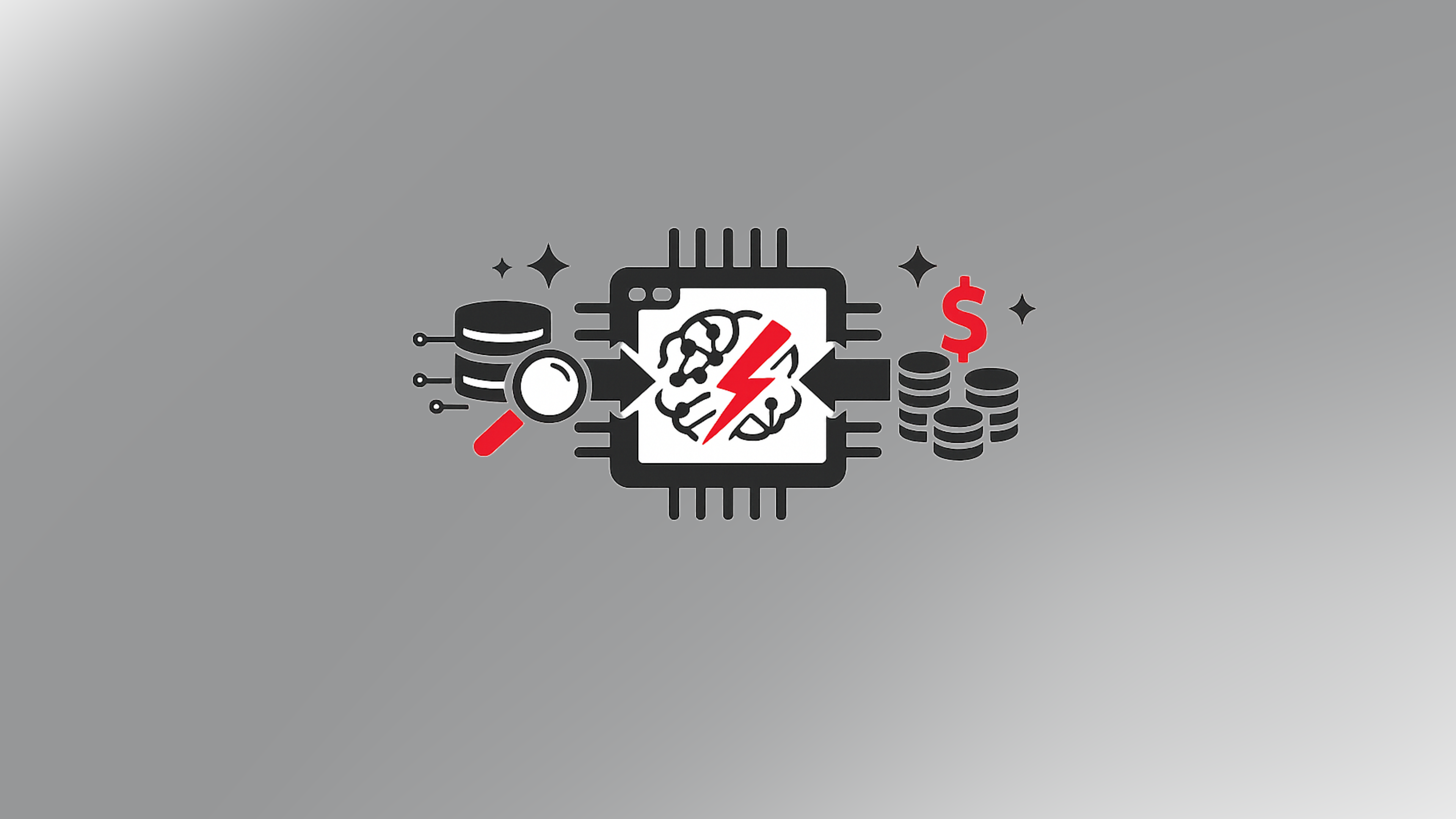
Every team building an AI feature that requires domain-specific knowledge eventually faces the same architecture decision: do we fine-tune a model on our data, or do we use retrieval-augmented generation to give the model access to our knowledge at inference time? The wrong choice can mean months of work, tens of thousands of pounds in compute costs, and a system that performs worse than the simpler alternative would have.
The confusion is understandable. Fine-tuning sounds like the correct approach — you teach the model your domain, so it understands your business. RAG sounds like a workaround — you give the model documents to read rather than actually teaching it anything. In practice, for the vast majority of production use cases, RAG is not the workaround. It is the right architecture.
What Fine-Tuning Is Actually Good For
Fine-tuning modifies the weights of a pre-trained model by training it further on domain-specific data. This adjusts the model's behaviour, style, and implicit knowledge — but it is not a mechanism for reliable knowledge injection. A fine-tuned model does not 'know' your documentation the way a database knows its records. It has updated statistical tendencies based on your training data, which is a different and weaker guarantee.
Fine-tuning costs for enterprise models currently range from $20,000 to $200,000+ depending on model size, training data volume, and compute requirements. The process takes weeks. And the resulting model requires re-training whenever the underlying knowledge changes — meaning a product catalogue update, a policy revision, or a new product launch triggers another training cycle.
The cases where fine-tuning genuinely adds value are narrower than most teams expect: changing the model's output format or style consistently (e.g., generating responses in a specific brand voice), teaching the model a specialised task type that does not appear in its pretraining data, or improving performance on a narrow, stable domain where the training data is high quality and does not change frequently.
Why RAG Is the Right Default for Knowledge Retrieval
Retrieval-augmented generation works by storing your domain knowledge as vector embeddings in a database, then retrieving the most semantically relevant chunks at query time and including them in the model's context window. The model reasons over the retrieved content — it does not need to have memorised it.
This architecture has several properties that make it better for most knowledge retrieval use cases. The knowledge base updates in real time: add a new document to the index, and the system immediately has access to it — no retraining. The system can cite its sources, because the retrieved chunks are explicit. Hallucination rates drop when the model is grounded in specific retrieved content rather than relying on memorised weights. And the infrastructure cost is a small fraction of fine-tuning.
70% of enterprise AI projects in 2025 used retrieval-augmented approaches according to a survey by Databricks. The remaining 30% skewed heavily towards use cases with specific style or format requirements — not knowledge retrieval.
A Practical Decision Framework
Use RAG when: your use case requires up-to-date knowledge, document search, Q&A over a knowledge base, or access to proprietary information. This covers the majority of enterprise AI features: internal search, customer support assistants, document processing, product recommendation.
Use fine-tuning when: you need consistent output format or style, you are working on a narrow specialised task not covered by pretraining, and your training data is high-quality and stable.
Use both when: you need specialised output style AND access to a frequently-updated knowledge base. A fine-tuned model with a RAG layer on top is uncommon but legitimate for specific enterprise use cases.
At Octopus, we build AI features with the architecture that matches the use case — not the one that sounds most impressive in a slide deck. The majority of the AI features we have shipped in production use RAG, because the majority of the problems our clients need to solve are knowledge retrieval and reasoning problems, not style and format problems. The right choice is the one that works reliably in production, not the one that requires the largest upfront investment.
Keep reading

AI & Technology · 17 April 2026
Everyone's Building Tools With Claude. The Hard Part Is Shipping Them.

Development · 17 April 2026
Umbraco vs WordPress: Why Serious Businesses Are Making the Switch
AI & Technology · 17 April 2026
Umbraco 17 Is Here — And It Changes How You Work
Also from our work
Eunoia
Eunoia – Praxismenedzsment terapeutáknak
Egy praxismenedzsment operációs rendszer pszichoterapeuták számára – amelyet azért fejlesztettünk, hogy csökkentse a terápiás munka adminisztratív terheit, így a szakemberek arra fordíthatják az idejüket, ami igazán számít.
View article
Keep Reading