
Personalisation at Scale: How Luxury Hotel Groups Drive 20%+ Revenue Uplift from Their Own Data
80% of luxury guests expect personalisation. McKinsey research puts the revenue uplift at 20%+ for operators who do it well. Most hotel groups have the data already — the gap is the infrastructure to use it.
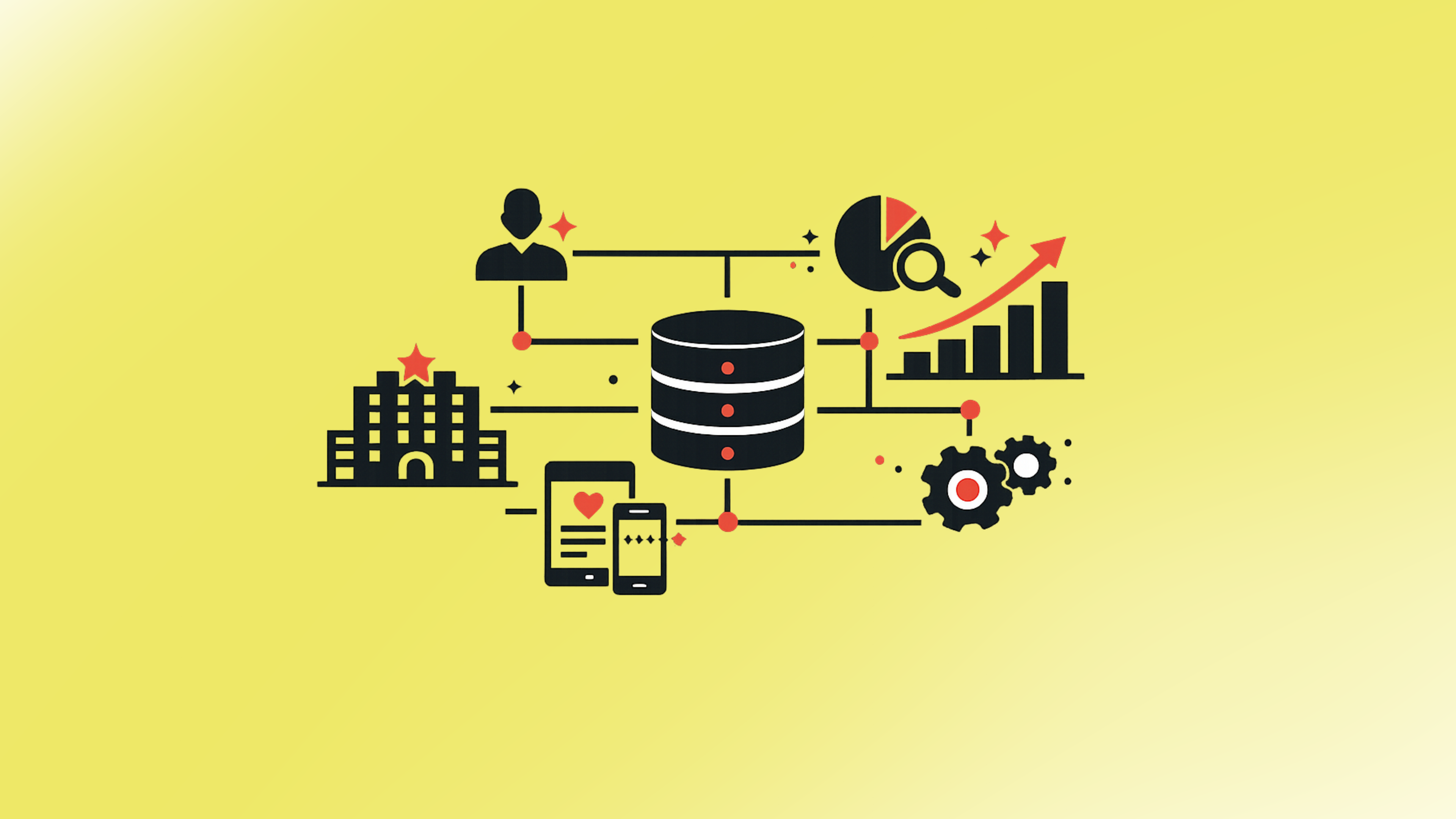
The guest who stayed at your property eighteen months ago left a trail of signals: which room category they chose, whether they upgraded, what they ordered at the restaurant, whether they used the spa, how they communicated with the concierge, what time they checked in and out. If they are a returning guest, those signals are valuable. If they are a guest who stays three or four times a year, they are the foundation of a commercial relationship that is worth substantially more than a series of transactional bookings.
McKinsey's research on personalisation at scale puts the revenue uplift for hospitality operators who deploy it well at 20–30% over their non-personalised baseline. Returning guests already spend 67% more on average than first-time visitors, according to research by Bain & Company. Personalisation compounds that advantage by making returning guests feel known — which is the fundamental promise of luxury hospitality.
The Data Gap vs the Infrastructure Gap
Most luxury hotel groups do not have a data problem. They have an infrastructure problem. The guest preference data exists: in the PMS, in the CRM, in the F&B platform, in the booking history, in the service request logs. What is missing is the integration layer that makes that data accessible at the moments when it can drive revenue.
The most common failure mode is data that lives in one system and cannot surface in another. A guest's dietary requirements are recorded by the restaurant on their last visit — but the kitchen does not see them when the same guest books a table six months later through the reservations platform. A returning guest's room preference (high floor, away from lift, extra pillows) is in the PMS notes but does not trigger an automatic housekeeping task or inform the pre-arrival communication.
80% of luxury guests say they expect brands to personalise their experience, according to Salesforce's State of the Connected Customer report. Among guests who have experienced genuine personalisation, 78% say it increases their likelihood to book direct on a return visit. The expectation is not a preference — it is a baseline that, when unmet, creates a gap between the brand promise and the delivered experience.
What Effective Personalisation Infrastructure Looks Like
The technical foundation is a unified guest profile that pulls data from the PMS, CRM, booking engine, F&B platform, and communication history into a single record — accessible in real time by every system that needs it. Building this integration layer is the primary engineering challenge, and it is where most off-the-shelf PMS implementations fall short.
On top of the unified profile, personalisation surfaces through a series of specific moments: the pre-arrival email that references the guest's previous stay and pre-checks their preferences; the front desk system that surfaces profile notes before the guest reaches the desk; the F&B platform that flags dietary requirements when a reservation is made; the digital concierge that recommends experiences based on the guest's demonstrated interests.
The ROI calculus is direct. A luxury property with 5,000 annual room nights, where personalisation drives a 15% increase in F&B spend per stay (£45 average) and a 10% increase in repeat booking rate, adds approximately £225,000 in incremental revenue. That is the kind of number that justifies a serious integration investment.
Building for Personalisation Without Vendor Lock-In
The risk in personalisation infrastructure is building it in a way that ties the property to a specific PMS or CRM vendor's roadmap. We approach these integrations through API-first architecture — building the data layer around standard interfaces that can accommodate PMS migrations without rebuilding the personalisation logic.
For hotel groups managing multiple properties across different PMS platforms, this architecture is essential. The guest profile should be property-portable: a guest recognised at one hotel in the group should be recognised at any other, regardless of which PMS sits behind each property.
This is technically achievable. It is not technically simple. But the commercial value of a hotel group that makes every returning guest feel known across every property in the portfolio — that is a differentiated proposition that no OTA can replicate.
Keep reading

AI & Technology · 17 April 2026
Everyone's Building Tools With Claude. The Hard Part Is Shipping Them.

Development · 17 April 2026
Umbraco vs WordPress: Why Serious Businesses Are Making the Switch
AI & Technology · 17 April 2026
Umbraco 17 Is Here — And It Changes How You Work
Also from our work
Eunoia
Eunoia – Praxismenedzsment terapeutáknak
Egy praxismenedzsment operációs rendszer pszichoterapeuták számára – amelyet azért fejlesztettünk, hogy csökkentse a terápiás munka adminisztratív terheit, így a szakemberek arra fordíthatják az idejüket, ami igazán számít.
View article
Keep Reading