
Why Your Luxury Hotel Website Is Losing Direct Bookings to OTAs — And How to Take Them Back
OTAs charge 15–25% commission on every booking they generate. Most hotel websites hand them that revenue willingly — not because guests prefer OTAs, but because the hotel's own site fails to convert. Here is what to fix.
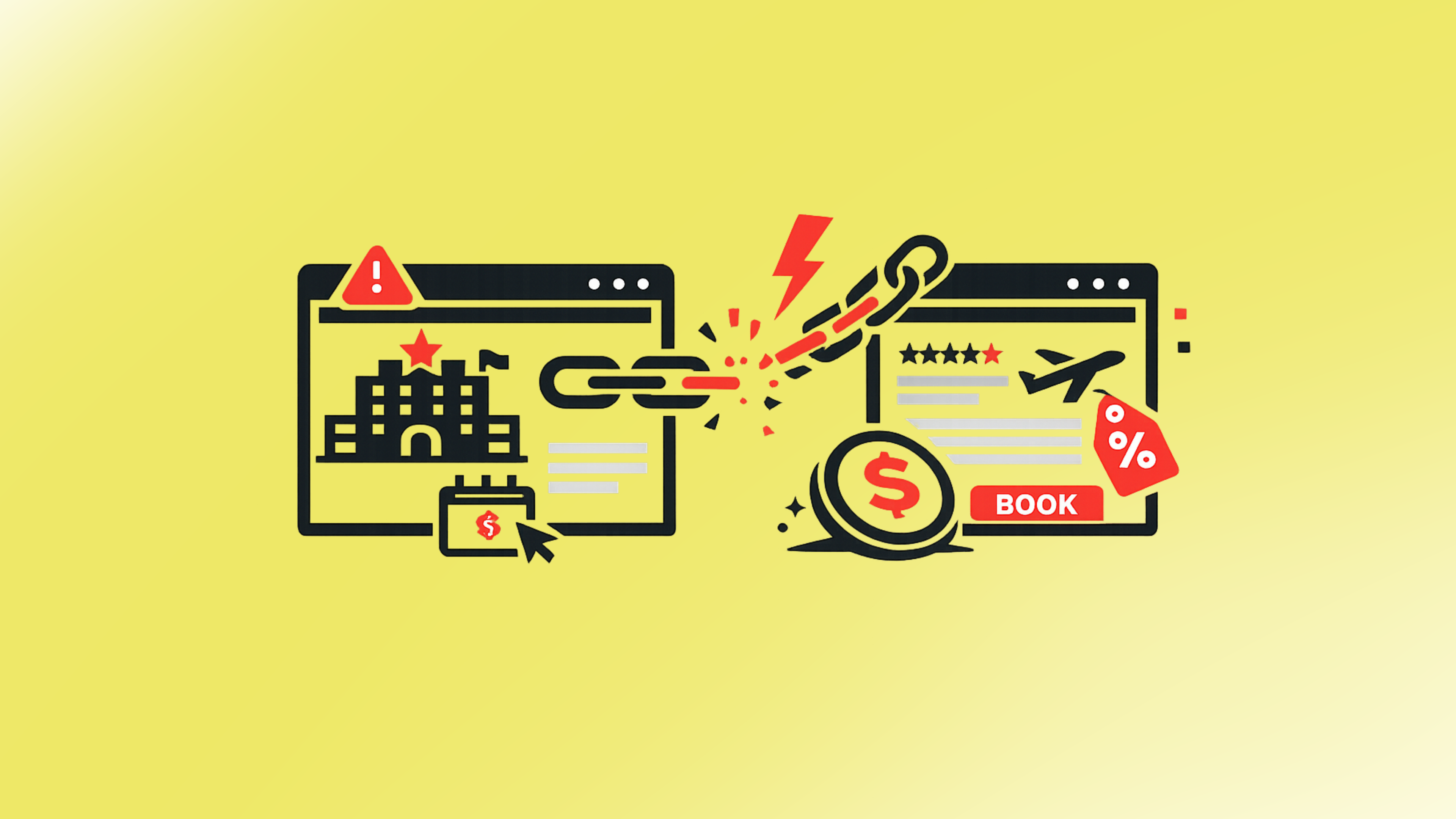
Booking.com and Expedia did not win the distribution war because travellers prefer them. They won it because most hotel websites are too slow, too unclear, and too friction-heavy to compete at the moment of booking. The average OTA page loads in under two seconds. The average independent hotel website takes more than four. That gap costs direct bookings every single day.
The commission mathematics are stark. OTAs charge between 15 and 25 percent on every booking they generate. For a property doing £3 million in annual room revenue, OTA-sourced bookings at 40% share with a 20% average commission means £240,000 leaving the business annually — to platforms that built nothing, staffed nothing, and delivered no hospitality whatsoever. And that figure does not include the lost data advantage of not owning the customer relationship.
Why Guests Book via OTA Even When They Prefer Your Property
Research by Fuel Travel found that 57% of guests visit a hotel's own website before completing their booking on an OTA. They looked. They considered booking direct. Something about the experience failed to convert them.
The failure modes are consistent across properties: a booking engine that feels like a third-party widget because it is one, with different typography and a jarring transition from the main site; rate parity that gives guests no reason to prefer direct; a mobile experience that is technically functional but frustrating to navigate; page speed that creates doubt at the most important moment in the funnel.
None of these are brand problems. They are engineering and design problems — which means they are fixable.
The Direct Booking Conversion Stack
Properties that consistently win direct bookings have solved for a specific set of things that most websites get wrong.
Speed. A 1-second improvement in load time increases conversions by 7% according to Google's own data. We build hotel sites on Next.js with edge-cached static generation, next-generation image formats, and CDN delivery so that the first contentful paint happens in under 1.5 seconds — even on the high-resolution photography that luxury hospitality requires.
Booking engine continuity. The visual and UX break between a beautifully designed marketing site and a generic booking widget destroys conversion. We integrate booking engines — whether SynXis, Travelclick, Mews, or custom — into the design system so that the reservation experience feels like part of the same product, not a redirect to a different one.
A genuine reason to book direct. Best rate guarantees, room upgrade policies, complimentary extras, and loyalty benefits only convert if they are surfaced at the right moment — immediately before the guest makes the booking decision, not buried in an FAQ. We design these conversion triggers into the booking flow rather than adding them as afterthoughts.
Mobile parity. 68% of luxury travel research begins on mobile. Conversion rates on mobile are 2–3× lower than desktop on poorly optimised sites. The gap closes substantially when the mobile experience is designed first rather than adapted from desktop.
The Long-Term Arithmetic
A property that shifts 20% of its OTA-sourced bookings to direct, on 4,000 annual bookings at an average nightly rate of £350 and an average OTA commission of 18%, recovers approximately £50,000 in margin per year. The website investment that enables this is typically a fraction of that figure over a three-year horizon.
The compounding benefit is the data. Direct-booked guests leave their preferences, behaviour, and contact details with the property — enabling the personalisation that drives repeat visits and higher lifetime value. OTA-booked guests leave that data with the OTA.
The case for investing in your website as a direct booking engine is not a marketing argument. It is a straightforward commercial one.
Keep reading

AI & Technology · 17 April 2026
Everyone's Building Tools With Claude. The Hard Part Is Shipping Them.
Development · 17 April 2026
Umbraco vs WordPress: Why Serious Businesses Are Making the Switch
AI & Technology · 17 April 2026
Umbraco 17 Is Here — And It Changes How You Work
Also from our work
Eunoia
Eunoia – Praxismenedzsment terapeutáknak
Egy praxismenedzsment operációs rendszer pszichoterapeuták számára – amelyet azért fejlesztettünk, hogy csökkentse a terápiás munka adminisztratív terheit, így a szakemberek arra fordíthatják az idejüket, ami igazán számít.
View article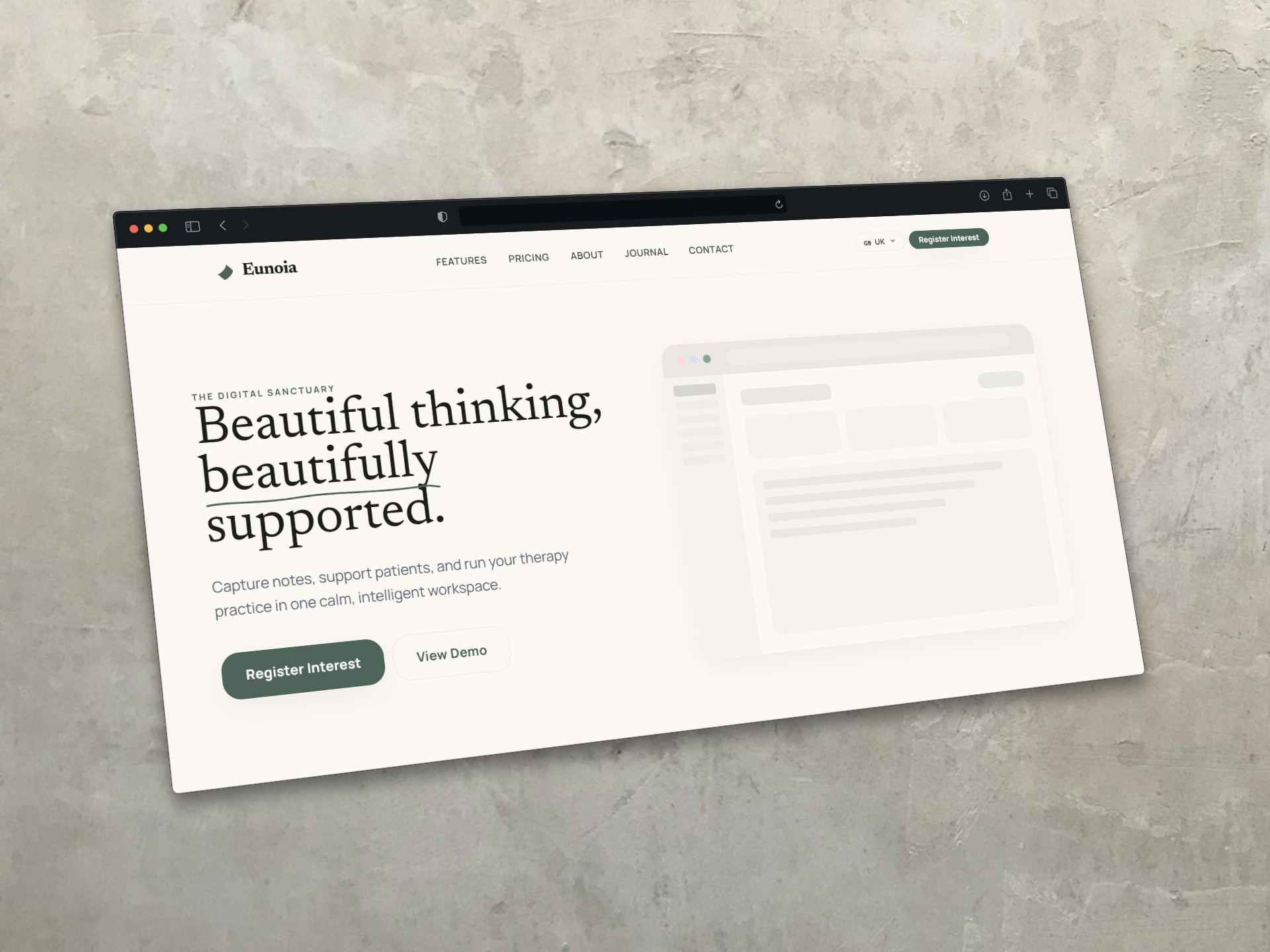
Keep Reading