
Luxury Hospitality in 2026: High-Touch Service, High-Automation Back Office
Luxury guests expect seamless tech and human warmth in equal measure. But most high-end properties are still running fragmented, manual back-office operations. Here is how AI, automation, and the right integrated platform close that gap.
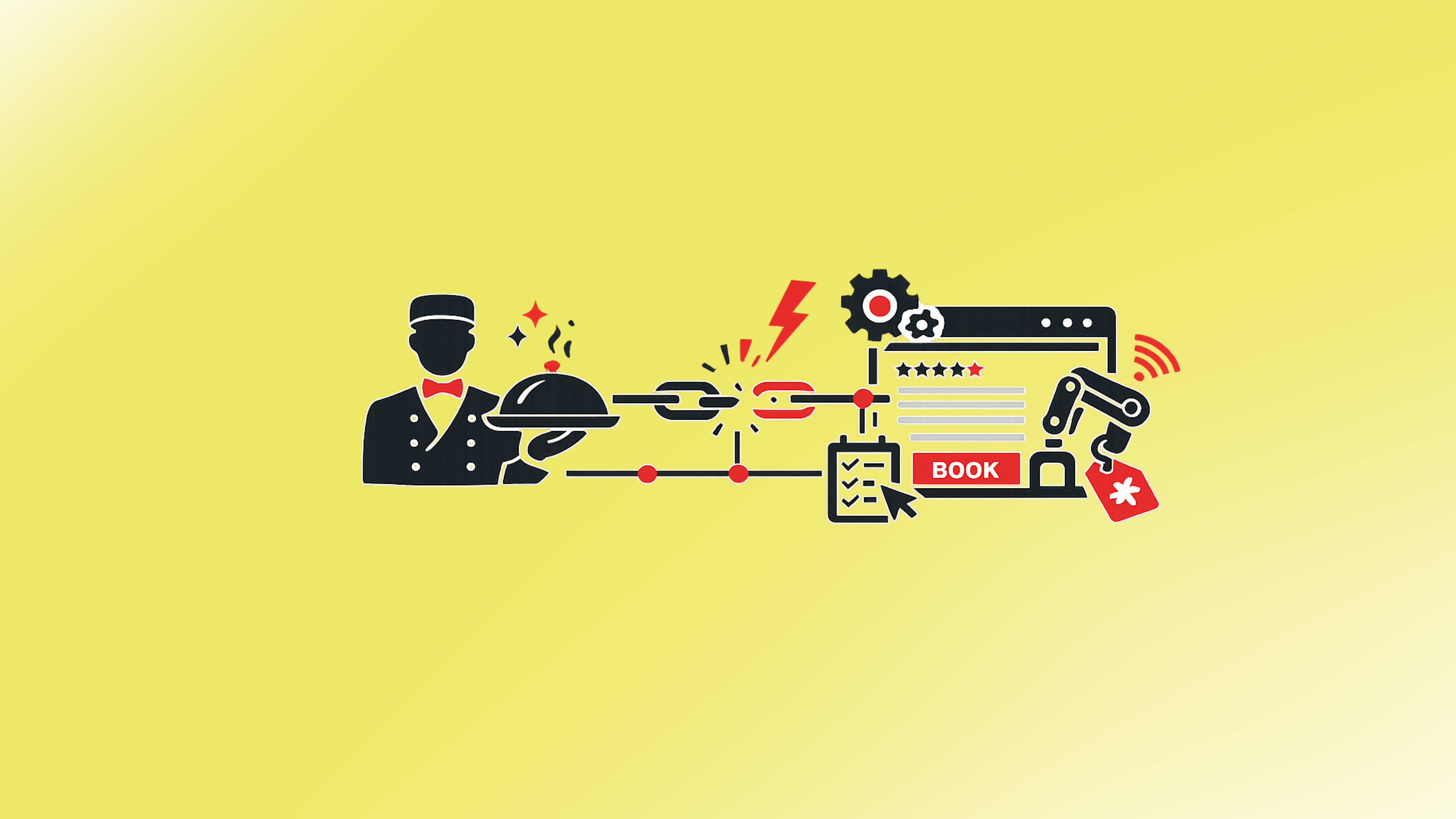
There is a paradox at the heart of luxury hospitality in 2026. The guest arriving at a five-star property expects to be recognised by name, greeted without a queue, handed their preferred newspaper, and offered the room temperature they set on their last stay. They also expect to check in from the car using their phone, control the blinds with their voice, and order a late-night negroni without calling reception.
Human warmth and seamless automation are no longer alternatives. The best operators have learned to deliver both — simultaneously. The ones who have not are losing bookings to properties that have.
But here is the part that rarely makes it into the trend reports: the guest-facing experience is only as good as the back office that supports it. And in most luxury properties, that back office is still a patchwork of disconnected systems, manual processes, and institutionalised workarounds.
What Luxury Guests Now Expect as Standard
The goalposts have shifted. Features that felt innovative three years ago are now baseline expectations for the upper-tier traveller.
Contactless and mobile check-in is no longer a pandemic-era accommodation — it is a preference. Guests who travel frequently do not want to stand at a desk. They want their key on their phone and their room ready on arrival.
Smart room technology — climate control, lighting, entertainment, and DND preferences stored and recalled per guest — is becoming a differentiator in the upper segments and a standard in ultra-luxury.
Mobile concierge and in-stay messaging through apps or WhatsApp-style channels allows guests to make requests, book experiences, and communicate with staff without friction. The best implementations feel like a text to a friend, not a ticket to a call centre.
Data-driven personalisation is the most powerful and least-deployed capability. Properties with mature CRM and PMS integrations can surface a returning guest's dietary restrictions in the kitchen before they have ordered, pre-stock their minibar with their preferred brands, and recommend activities based on past behaviour. Most properties have the data. Few have the infrastructure to use it.
The gap between what guests expect and what most properties deliver is not a lack of ambition. It is a lack of integrated systems.
The Back-of-House Problem Nobody Talks About
Walk into the back office of most luxury hotels or high-end restaurant groups and the picture changes dramatically. The front-of-house experience may be polished and seamless; the operational systems behind it are often anything but.
The typical hospitality back office in 2026 looks something like this:
• A PMS (Property Management System) that does not talk natively to the F&B platform
• Rota and scheduling managed in spreadsheets or a standalone tool with no connection to payroll
• Inventory tracked across multiple systems — or in the head of a long-serving manager
• Tronc and tips managed manually with significant compliance risk under the Employment (Allocation of Tips) Act 2023
• Finance and ERP data reconciled monthly rather than in real time, meaning margin decisions are always backward-looking
This fragmentation is not just an operational inconvenience. It has a direct cost. Overstaffed shifts because rota planning did not account for a forecasted quiet period. Food waste from over-ordering because purchasing is not connected to actual demand. Compliance exposure because tipping records are incomplete. Missed upsell opportunities because the kitchen does not know which guests have dietary notes in the CRM.
The front-of-house investment in experience is being undermined by back-of-house infrastructure that has not kept pace.
Where AI and Automation Change the Equation
The good news is that the tools to close this gap are now mature enough, and affordable enough, to deploy at scale. Here is where we see AI and automation delivering the most measurable value for luxury operators:
Demand Forecasting and Rota Optimisation
Labour is typically the largest controllable cost in hospitality, and it is managed with surprising imprecision. AI-driven forecasting — trained on historical covers, booking data, local events, seasonality, and even weather patterns — can predict staffing needs with a level of accuracy that manual planning cannot approach. The result is a rota that meets demand without padding it, week after week.
When this forecasting is connected to the scheduling and payroll system, the efficiency gains compound. Managers spend less time on admin. Wage costs align with revenue. Staff get more predictable schedules. In our work building Rocket OS, predictive demand modelling was one of the first services we extracted from the monolith precisely because of how much operational leverage it provided.
Dynamic Menu Pricing and Margin Optimisation
Ingredient costs fluctuate. Supplier relationships shift. Seasonal menus change. Yet most restaurant groups still price their menus on gut instinct and annual reviews rather than real-time margin analysis. AI-assisted menu engineering — connected to live purchasing data, actual food cost per dish, and sales velocity — allows operators to identify which dishes are eroding margin and which represent untapped pricing power.
For luxury operators where average spend per head is high and every point of gross margin matters, this is not a marginal improvement. It is the difference between a profitable F&B operation and one that quietly drains from the hotel's bottom line.
Predictive Maintenance and IoT Integration
Smart rooms generate data. HVAC systems, kitchen equipment, laundry operations, and building management systems all produce signals that, when monitored and analysed, can predict failures before they become guest-facing problems. A boiler fault flagged three days before failure is a scheduled maintenance call. The same fault undetected is a complaint, a room taken offline, and a potential negative review.
IoT integration — connecting physical systems to a central monitoring and alerting platform — is one of the fastest-growing areas of hospitality technology investment. The properties doing it well are not just preventing failures; they are also driving significant energy cost reductions through automated optimisation of heating, cooling, and lighting across unoccupied rooms.
Where Octopus Fits: Building the Integrated Operating Layer
This is the work we do, and it is where we are most differentiated from both traditional hospitality IT vendors and generalist software agencies.
We do not sell off-the-shelf software. We do not implement someone else's ERP. We build the integrated operating layer that connects the systems your property already has, fills the gaps they cannot cover, and ensures that your operational data is actually usable — in real time, by the people who need it.
Rocket OS: ERP-Grade Operations for Hospitality
Rocket OS was built from the ground up as a hospitality operating system. It brings together rota management, demand forecasting, payroll, compliance, stock and purchasing, and real-time reporting into a single platform — purpose-built for the operational complexity of high-volume hospitality.
For restaurant groups and hotel F&B operations, it functions as an ERP: a single source of truth for the operational data that drives labour, cost, and margin decisions. Unlike generic ERP software adapted for hospitality, Rocket OS was designed by people who understand the operational reality of running shifts, managing seasonal demand, and hitting GP targets under pressure.
Rocket Tronc: Compliant Tipping at Scale
The Employment (Allocation of Tips) Act 2023 fundamentally changed the compliance landscape for UK hospitality. Manual tronc management — the spreadsheets, the manual calculations, the informal distributions — is no longer defensible. Workers can now request three years of tipping records. Employers must have a written, accessible policy.
Rocket Tronc automates the entire tronc process: POS integration, allocation calculation, HMRC-ready reporting, and worker-facing transparency. For luxury operators employing hundreds of tipped staff across multiple outlets, it removes the compliance risk and the administrative burden simultaneously.
Custom PMS, CRM, and Booking Engine Integrations
The hardest problem in hospitality technology is not building any single system — it is making the systems talk to each other. A guest preference recorded in the CRM should surface in the kitchen. A booking in the reservation system should trigger a pre-arrival communication. An upsell purchased through the mobile app should hit the PMS without manual reconciliation.
We build the integration layer between PMS platforms (Opera, Mews, Apaleo), CRM systems, booking engines, and the operational platforms that power the guest experience. This is bespoke integration engineering — the kind of work that most agencies step back from because it is complex, unglamorous, and requires deep domain knowledge to get right.
It is also, in our experience, where the highest-value improvements for luxury operators actually live.
The Opportunity in 2026
Luxury hospitality has always competed on experience. The operators who win in 2026 will be the ones who understand that experience is now a systems problem as much as a service problem.
The technology to deliver genuine high-touch, high-automation hospitality exists. Demand forecasting accurate enough to halve rota inefficiency. Tronc platforms that handle compliance automatically. IoT integrations that prevent failures before guests notice them. Personalisation engines that make returning guests feel known rather than processed.
The gap is not the technology. It is the expertise to integrate it correctly, to build the parts that do not exist off the shelf, and to do it without disrupting operations in the process.
That is the conversation we are having with luxury operators right now. If your property or group is ready to close the gap between your front-of-house ambition and your back-of-house reality, we would like to talk.
Keep reading

AI & Technology · 17 April 2026
Everyone's Building Tools With Claude. The Hard Part Is Shipping Them.

Development · 17 April 2026
Umbraco vs WordPress: Why Serious Businesses Are Making the Switch
AI & Technology · 17 April 2026
Umbraco 17 Is Here — And It Changes How You Work
Also from our work
Eunoia
Eunoia – Praxismenedzsment terapeutáknak
Egy praxismenedzsment operációs rendszer pszichoterapeuták számára – amelyet azért fejlesztettünk, hogy csökkentse a terápiás munka adminisztratív terheit, így a szakemberek arra fordíthatják az idejüket, ami igazán számít.
View article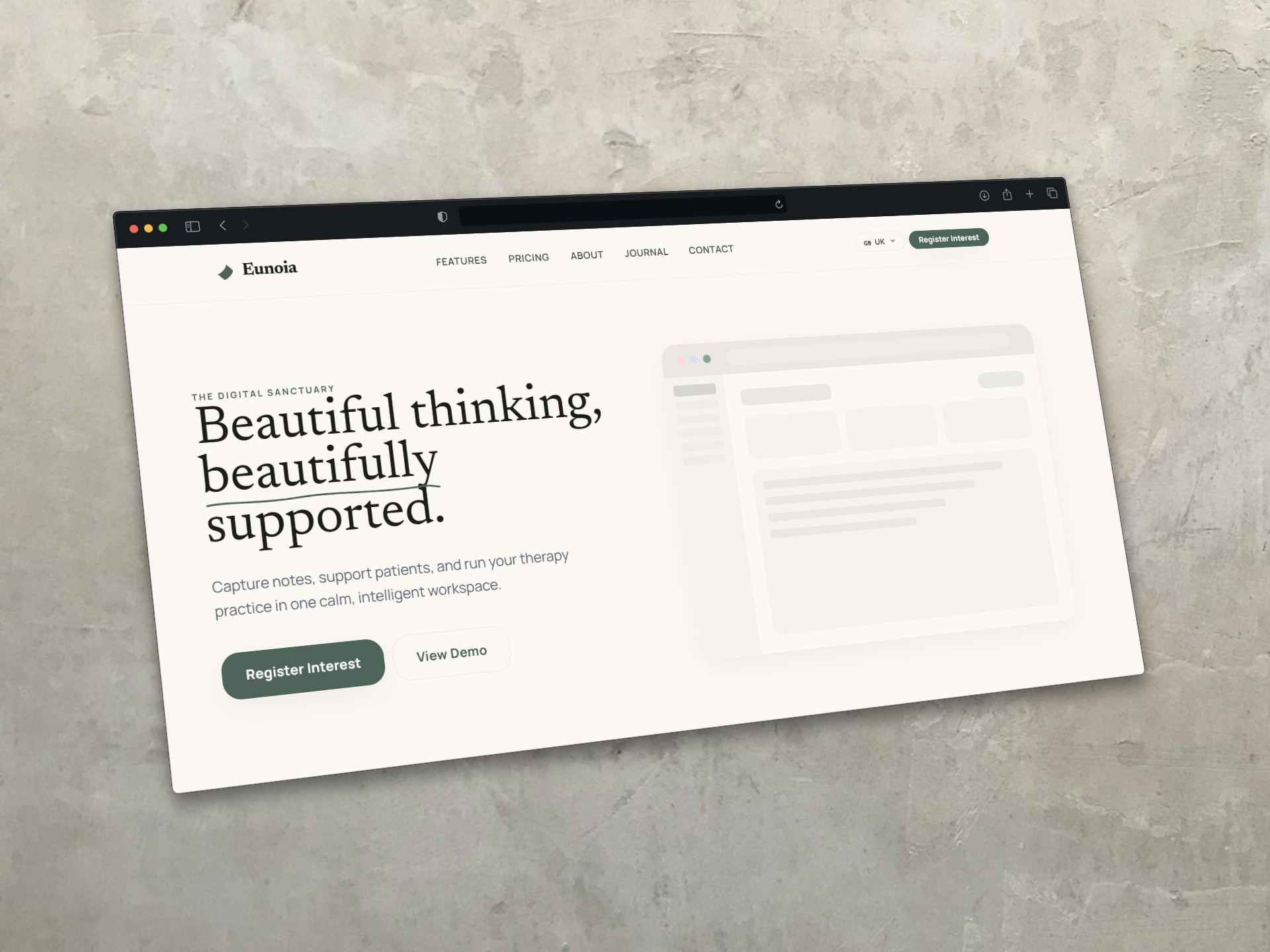
Keep Reading