
From Legacy to Launch in 6 Months: How AI-Powered Teams Rebuild Complex Platforms
AI coding assistants now assist with 40%+ of production code globally. But speed without architecture is just faster debt. Here is how Octopus uses AI to deliver fast, safe platform modernisation — and how we rebuilt Rocket OS in six months.
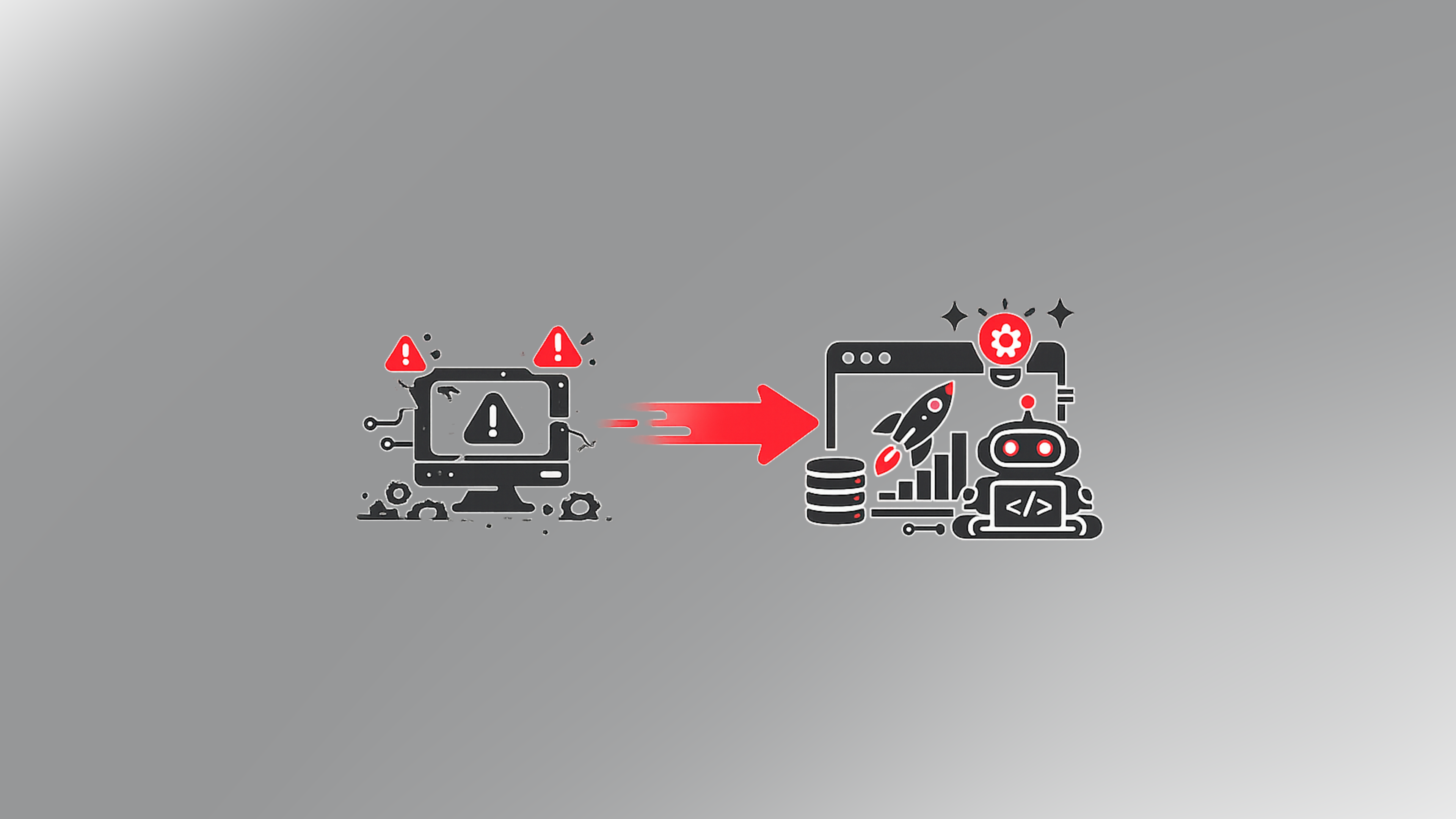
Six months. That is how long it took Octopus to take Rocket OS — a complex, multi-module hospitality platform with years of legacy architecture — from an overloaded monolith to a fully deployed, microservices-based system. No big-bang rewrite. No years-long migration project. No heroics.
The difference was not a bigger team. It was a smarter one, augmented by AI.
The New Reality: AI Is Already Inside Your Dev Team
The numbers are striking. According to recent industry surveys, approximately 80–85% of developers now use or are actively planning to use AI coding assistants. In 2025–2026, analysts estimate that over 40% of production code is either generated or heavily AI-assisted. GitHub Copilot, Cursor, Claude, and their peers have moved from curiosity to daily workflow.
This is not hype. It is a structural shift in what small, senior teams can deliver. Tasks that once required a developer's full focus for a day — boilerplate scaffolding, repetitive migrations, test generation, documentation — are now hours or minutes. A well-structured team of four experienced engineers, AI-augmented, can outship a traditional team of twelve in raw feature velocity.
But velocity without architecture is just faster debt accumulation.
The Risk Nobody Is Talking About
The same surveys that celebrate AI adoption also flag its failure modes. AI-generated code can be:
• Architecturally naive — optimised for the immediate task, not the system it lives in
• Security-blind — autocompleting patterns that introduce injection vulnerabilities, exposed secrets, or broken auth flows
• Tech-debt-generating — producing code that passes tests but is unmaintainable six months later
Teams that treat AI as a replacement for senior engineering judgment — rather than an amplifier of it — find themselves with faster-growing, harder-to-manage codebases. The speed gain disappears in the maintenance overhead.
This is the tension at the heart of AI-assisted development: it raises your ceiling, but it also lowers the floor if you let it.
The Octopus Approach: Fast and Safe Are Not Opposites
At Octopus, we do not sell cheap AI development. We do not promise to build your platform for half the cost by generating everything with a language model and shipping it. That is a race to the bottom, and your users will feel the consequences.
What we sell is fast, safe delivery — where AI handles the heavy lifting of boilerplate and migration work, while humans own domain design, architectural decisions, QA strategy, and every hard call that requires judgment.
The principle is simple: AI is excellent at pattern execution. Humans are essential for pattern selection.
Our Framework: Discover to Deploy in Six Phases
We use a structured process for every legacy modernisation engagement. It is not a waterfall — each phase informs the next, and we move fast within each one.
Phase 1 — Discover
Before a single line of code is written or generated, we map the business. What does the platform actually do? What are its real dependencies — not what the documentation says, but what the traffic and logs reveal? Who are the users and what do they need to be true on day one of the new system? This phase surfaces the constraints that will govern every subsequent decision.
Phase 2 — Map the Legacy
We use a combination of automated tooling and human review to document the existing system's architecture, data models, integration points, and failure modes. AI assists here — scanning codebases, generating dependency graphs, flagging anti-patterns — but a senior engineer validates every significant finding. We are looking for the seams: the places where the monolith can be split without fracturing business logic.
Phase 3 — AI-Assisted Code Migration
This is where AI earns its keep. Once we know what we are building and why, we use AI coding assistants aggressively for the migration work: converting patterns, scaffolding new services, transforming data models, generating repetitive integration code. A task that might take a human engineer three days to write carefully takes hours with AI — and the human's job shifts from typing to reviewing and directing.
Critically, we do not generate and ship. We generate, review, and refactor. Every AI-produced chunk of code is read by a senior engineer before it enters the codebase.
Phase 4 — Human Architectural Refactor
After the initial migration, we step back. The AI-generated code does the job, but it often does it in a way that is locally correct but globally suboptimal. This phase is purely human: we look at the new system as a whole, identify where the seams are wrong, where the data flows are inefficient, where a different abstraction would make the next year of development easier. This is the work that separates a migration from a transformation.
Phase 5 — Automated and Human QA
We write tests — a lot of them — and we use AI to help generate test suites for the migrated code. But we also do deliberate human QA for the scenarios that matter most: edge cases, failure modes, security vectors, and the user journeys that directly drive revenue. Automated coverage gives us confidence at scale; human QA gives us confidence where it counts.
Phase 6 — Deploy
We favour incremental deployment over big-bang launches. Feature flags, canary releases, and staged rollouts mean that when something unexpected surfaces in production — and something always does — the blast radius is small and the rollback is fast. Monitoring and observability are set up before the first user sees the new system, not after.
Case Study: Rocket OS
Rocket OS is Octopus's own hospitality operations platform — a SaaS system used by hospitality businesses for everything from staff scheduling and payroll to compliance and demand forecasting. When we first built it, we moved fast: a monolithic Next.js application backed by a single PostgreSQL database. It shipped, it worked, and it scaled — until it did not.
The Problem
As the customer base grew, we hit a set of compounding bottlenecks. The payroll calculation engine — CPU-intensive, especially at month-end — was competing with the real-time dashboard for API resources. The ML-driven demand forecasting pipeline was constrained by running inside the same process as the booking management logic. Database connections were a permanent source of contention. Deploying any part of the system meant deploying all of it.
The architecture that had been a strength — simple, fast to iterate on, easy to reason about — had become the constraint.
The Approach
We did not rewrite Rocket OS. We decomposed it, following our six-phase framework.
The Discover and Map phases confirmed what we suspected: three services were driving the majority of the operational pain. We extracted those first — the payroll engine, the demand forecasting pipeline, and the real-time event bus — and left everything else in the monolith. There is no prize for unnecessary complexity.
AI-assisted migration handled the scaffolding of the new services, the data model transformations, and the event-driven integration patterns. Human architectural review redesigned the service boundaries and the communication contracts. QA focused heavily on the payroll engine, where a silent calculation error would have real-world consequences for workers.
The Result
Six months from the start of the engagement to production deployment of the new architecture:
• 99.95% uptime on the new platform (up from 98.7% on the monolith)
• 3× faster month-end payroll processing
• Independent deployment of each service — no more full-system deploys for a single change
• Development velocity increased because teams could work on and ship individual services without coordinating across the entire codebase
The Rocket OS rewrite is now the reference case we share with every client considering a platform modernisation. Not because the technology was exotic — it was not — but because the process worked.
What This Means for Your Platform
If you are running a platform with legacy architecture — whether that means a monolith that has grown beyond its design, a codebase that is slowing your team down, or a technology stack that no longer fits your scale — the window for action has never been more accessible.
AI has changed the economics of modernisation. Work that once required a large team and a long timeline can now be done faster, with a smaller team, if the people involved know how to use AI as a tool rather than a replacement for engineering judgment.
That is what we do. If you want to talk through what it could look like for your platform, we would be glad to have the conversation.
Keep reading

AI & Technology · 17 April 2026
Everyone's Building Tools With Claude. The Hard Part Is Shipping Them.

Development · 17 April 2026
Umbraco vs WordPress: Why Serious Businesses Are Making the Switch
AI & Technology · 17 April 2026
Umbraco 17 Is Here — And It Changes How You Work
Also from our work
Eunoia
Eunoia – Praxismenedzsment terapeutáknak
Egy praxismenedzsment operációs rendszer pszichoterapeuták számára – amelyet azért fejlesztettünk, hogy csökkentse a terápiás munka adminisztratív terheit, így a szakemberek arra fordíthatják az idejüket, ami igazán számít.
View article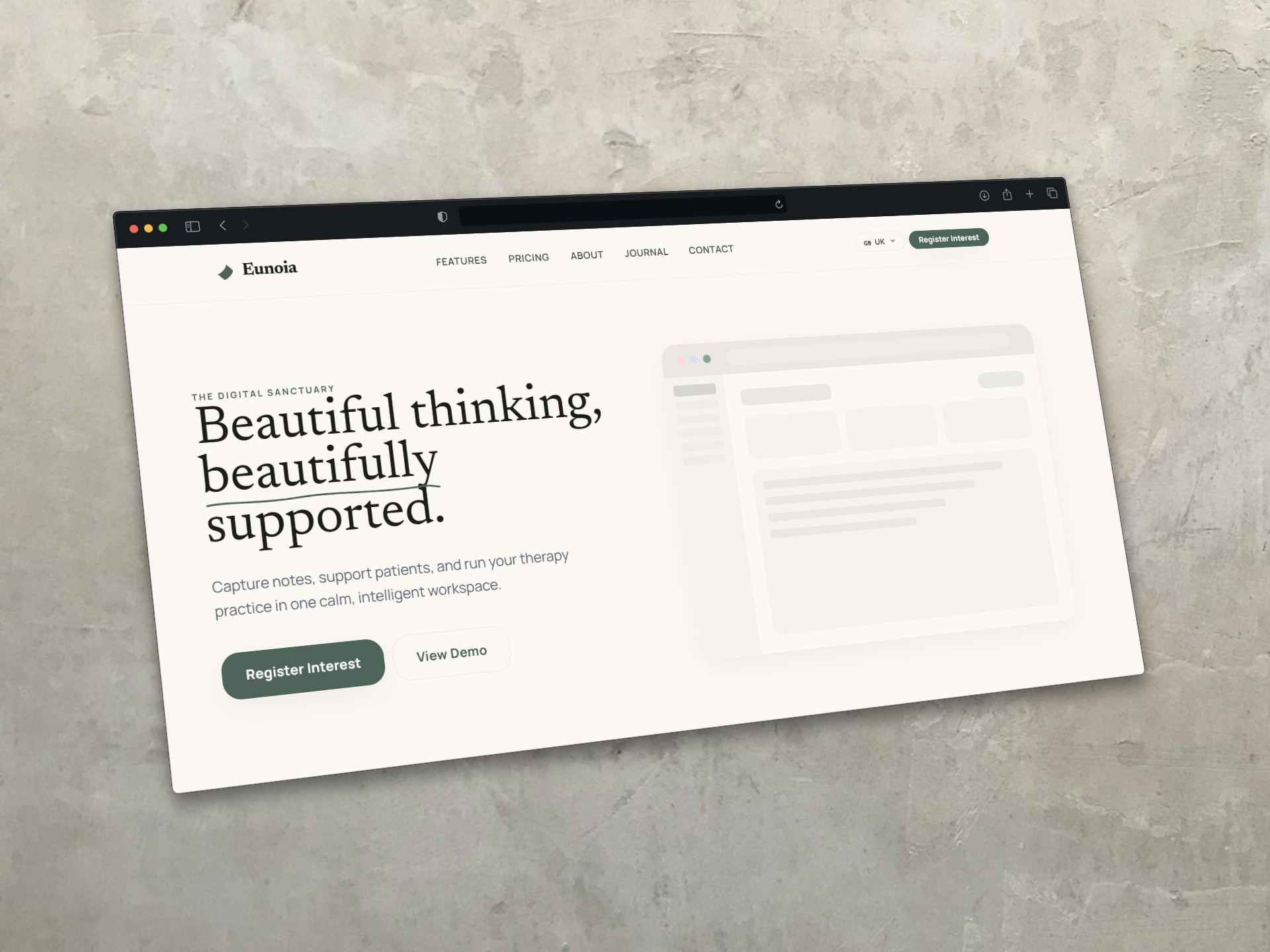
Keep Reading