
Core Web Vitals and Luxury Hospitality: Why a 3-Second Load Is Costing You More Than You Think
53% of mobile visitors abandon a site that takes more than 3 seconds to load. For a luxury hotel charging £400 a night, that is a measurable, recoverable revenue loss — and it is almost entirely an engineering problem.
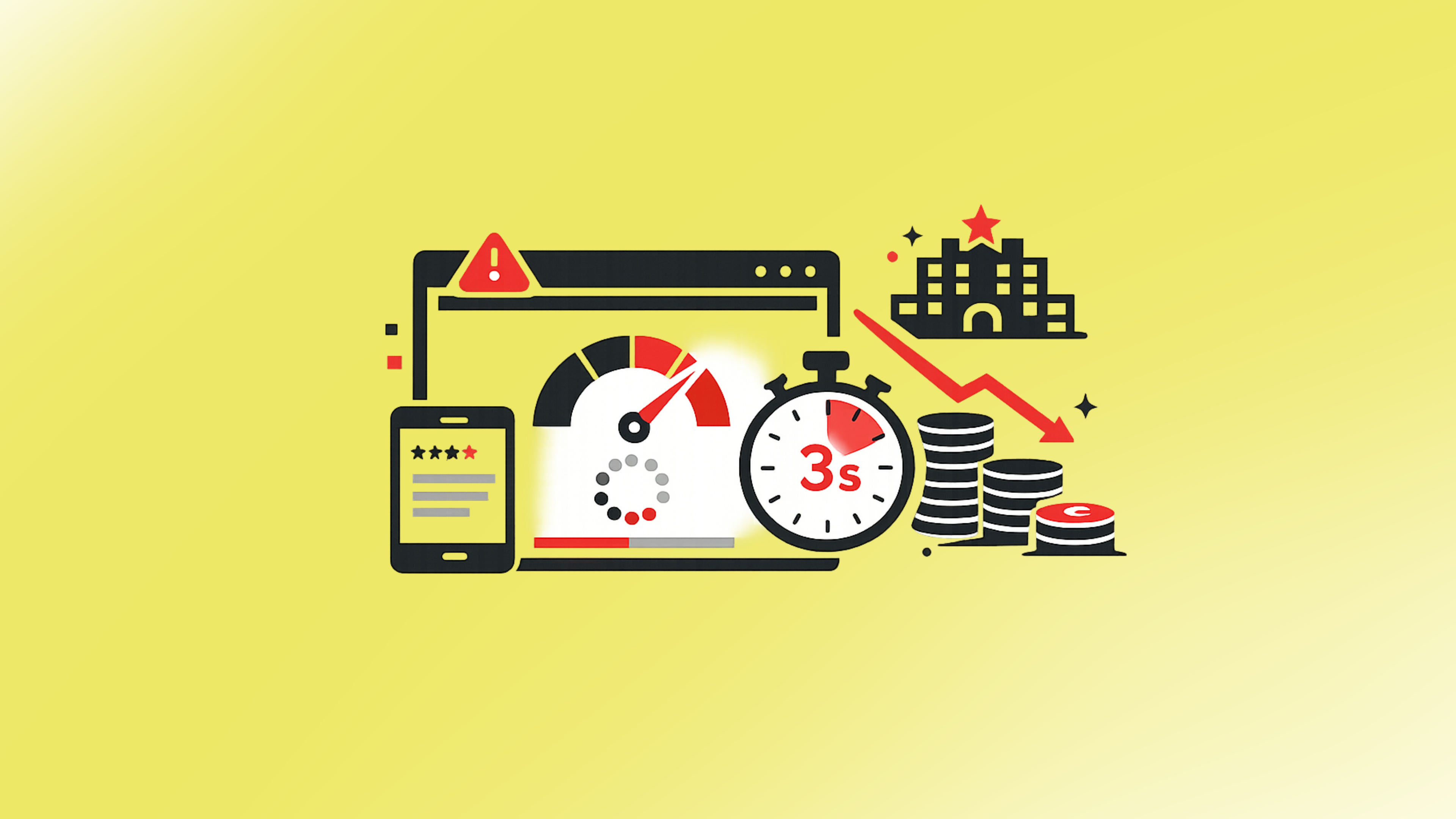
Google made Core Web Vitals a ranking signal in 2021. Since then, the hospitality industry has largely treated it as a technical checkbox — something to pass in a Lighthouse audit and move on from. That response misunderstands what the metrics actually measure and why they matter commercially far beyond search rankings.
Core Web Vitals measure the experience of real users loading real pages on real devices. LCP (Largest Contentful Paint) tells you how long before the main content appears. CLS (Cumulative Layout Shift) tells you whether the page jumps around as it loads. INP (Interaction to Next Paint) tells you how quickly the page responds to input. Together they describe something a guest intuitively understands: whether this website feels fast and reliable, or slow and unstable.
The Revenue Cost of Poor Performance
Google's research establishes a 1-second delay in page load reduces conversions by 7%. For a luxury hotel with an average booking value of £2,000 and 3,000 annual direct bookings, a 2-second improvement in load time represents approximately £420,000 in additional annual revenue — before accounting for the compound effect of improved search rankings driving higher traffic volumes.
53% of mobile users abandon a site that takes more than 3 seconds to load, according to Google's own study of 11 million mobile landing pages. In hospitality, where mobile is the primary research device for 68% of travellers, a website consistently failing the 3-second threshold is losing more than half its mobile visitors before they see a single room photograph.
The average luxury hotel website we audit weighs between 8 and 14MB uncompressed, with unoptimised hero images as the primary contributor. A single full-width hero photograph served as a 4MB JPEG rather than a properly compressed, next-generation format AVIF or WebP adds 2–3 seconds to the LCP on a mid-range mobile connection. Multiply that across the gallery pages, room pages, and F&B pages, and the cumulative load penalty becomes substantial.
What Good Performance Looks Like in Practice
The technically correct answer to slow hotel websites is not worse photography. It is an image pipeline that serves the right format, at the right resolution, to the right device, from the right CDN edge node — without requiring the developer to manually export twelve versions of every image.
On the builds we deliver, we use Next.js Image with automatic format detection (AVIF first, WebP fallback, JPEG for legacy), responsive srcset generation for every breakpoint, lazy loading for below-fold images, and Cloudflare CDN edge delivery. An 8MB hotel homepage becomes a sub-2MB first-load experience without touching a single piece of photography.
Font loading is the second most common performance culprit in luxury hospitality sites. Custom typefaces loaded without font-display:swap cause invisible text during load — a layout instability that contributes to CLS and a perceptible flash that undermines the refined first impression a luxury brand needs to make. Variable fonts, system font fallbacks, and preloading critical type subsets address this without compromising the typographic quality.
Core Web Vitals and Search Rankings
Beyond conversion, CWV performance directly affects organic search rankings through Google's page experience signal. A luxury hotel competing for high-intent terms — 'boutique spa hotel Yorkshire', 'five-star hotel Edinburgh' — is ceding ground to competitors with faster sites when its own performance score sits below the 'Good' threshold.
In categories where paid search CPCs are high and organic rankings matter commercially, the SEO benefit of passing CWV is not a vanity metric. It is traffic, and traffic at these intent levels is revenue.
The practical implication is that performance investment in hospitality websites has a dual return: direct conversion improvement and organic traffic growth. Few website investments offer that combination of compounding benefits.
Keep reading

AI & Technology · 17 April 2026
Everyone's Building Tools With Claude. The Hard Part Is Shipping Them.

Development · 17 April 2026
Umbraco vs WordPress: Why Serious Businesses Are Making the Switch
AI & Technology · 17 April 2026
Umbraco 17 Is Here — And It Changes How You Work
Also from our work
Eunoia
Eunoia – Praxismenedzsment terapeutáknak
Egy praxismenedzsment operációs rendszer pszichoterapeuták számára – amelyet azért fejlesztettünk, hogy csökkentse a terápiás munka adminisztratív terheit, így a szakemberek arra fordíthatják az idejüket, ami igazán számít.
View article
Keep Reading